

Leaderboard


Popular Content
Showing content with the highest reputation on 21/07/19 in all areas
-
So about eight days ago, I start a new job. My background is in credit management and analytical poop; I'm supervising a team of eight ladies, they're all pretty lovely to be honest. A couple of days in and I'm facing a battery of questions, you know, 'Are you married?' (Yes), 'Do you have kids?' (No, cats), 'What you you do outside of work?' (I play bass and read a lot). The latter question is always a way of saying that I do music, used to gig a lot, but don't now, it's a studio project and so on. I rarely make an effort to big myself up, I mean why would I? One of the ladies says that a heavily pregnant member of the team has a husband who plays drums, so I make a mental note, because drummers are hard to find. I sat down with her last week and we're just chatting and the conversation moves to music. She asks, 'You in a band then?' I explain yes, but no, but yes and it's all studio stuff. I mention I'd heard her husband played drums and - wondering whether he'd be up for a jam sometime - I ask whether he plays in a band. 'Yeah, he's in Scouting For Girls. They've been on Sony for about ten years.' I just wondered why the ground didn't open up and swallow me.6 points
-
Hey gang Following a recent fling with a '63 Precision, which made me realise the early 60's neck profile isn't for me, I'm back in the bosom of the lovely fat early 70s P neck. I picked this up a few days ago - it's a '72, with a neck stamp dated the month & year of my birth. It's light (about 8.5lbs) and resonant, original black, with a maple neck. They're just teaser pics at the moment as it needs a little bit of love, but I'll post the full story soon. In the meantime, I can barely stop playing it...5 points
-
Hi bubinga5, I feel sorry for you, and you're taking this rejection like a champ. But there's a few things that don't quite stack up - you joined a band doing soul/funk covers - presumably because (a) you enjoy playing these and (b) you know you're going to get regular paid work because the band are playing this material - bums on seats etc - and then along comes your new singer, and all this goes out the window because the guitarist and singer want to do the singer's own material ??? WTF ??? Surely the singers own material should be a side project - you don't sacrifice a perfectly good gigging set up just to appease some guy with his own material, and just because he wants to get off on this. And then you say the new bass player is a 'pro' - what, in terms of ability? Because if the band's suddenly going to start doing original material then they'll be joining the other 10,000 original bands in the UK scraping for any work at all, so your new bassist won't be able to give up the day job any day soon. So, tough as it may seem, you might be well out of this, and you can then find a band that has much clearer goals and objectives from day one. Best of luck !5 points
-
I was once sacked for not having the right look and direction that the band wanted. It actually boiled down to the fact that I wasn’t willing to hand over £6000 to help set up a rehearsal studio. The band in question got their studio, haven’t ever gigged and never released any material. Bovvered?????5 points
-
I know it's not a six string Dingwall custom shop but I've played it a few times and it's what I need in my price range!4 points
-
Couple of pub gigs this weekend. Well received and a couple of people even noticed the bass player. I was accosted in the car park and complimented. A very pleasant footnote. These gigs are a bit rough and ready, people out to get hammered, have a dance and a singsong, but not out specifically to see us. I have no snobbery around this at all; I'm a musician, my job is to entertain people not judge their lifestyle. Having experienced venues with back stage rooms, riders, quality PA and all that jazz there are times when I think how nice it would be to be back up there again. However I quickly squash such thoughts, reminding myself that not long ago I couldn't get any kind of gig at all.4 points
-
 Due to downsizing my collection I offer my Yamaha BB3000 1986 MIJ for sale. A top of the line vintage instrument in exceptional condition (one of the machine heads is slightly bent but 100% functional). Weighs 4.2 kg. 34" scale, 40 mm nut width. Stagg hard case included. Tradewise you could tempt me with a 4 string / 16.5 mm spacing Status S2 / S3 or Kingbass (+cash your way) but just because I'm in my "headless phase". Collection from Hemel Hempstead. Shipping to UK/Europe at buyers expense.3 points
 -
 This is my Sire Marcus Miller P7 with new tour tech gigbag. I bought this as a spare for my Moollon and I'm now getting another Moollon so it won't get used. Its' almost brand new with just the slightest witness marks on the scratch plate. Playability and sound is great with superb palate of sounds. I'd prefer collection but at this price postage will be extra.3 points
 -
Never been asked either. In fact many of the venues we play could do with their electrics checking!3 points
-
Take overs happen. That's always the risk when "mates" are asked to join. You're in good company with Brian Jones, Denny Dias and Syd Barrett.3 points
-
Yes, it was built and painted for TM Stevens but he didn’t keep it. Has barely been played and sat on display for over 30 years!3 points
-
I did both in my early teens, practising technique and using my ears. It just seemed like a natural thing to do and went hand in hand for me. Learning theory early on, was relatively easy, because I was enthusiastic and keen when I was Thirteen...Plus, it was a way into the school Orchestra, which was jam packed with girls.3 points
-
3 points
-
 Hi, I'm selling my Vigier Excess Original 5 string black in perfect condition, only some brands of use painted with marker (I tried to photograph but they are very small) but nothing serious. I'm looking for 1700€ Specifications taken from a magazine Neck Wood Maple Construction Bolt-on Width at Nut 1.81″ (46mm) Width at 12th Fret 2.54″ (64.4mm) Thickness at 1st Fret .81″ (20.5mm) Thickness at 12th Fret .94″ (23mm) Fingerboard Wood Rosewood or Maple Radius 11.81″ (300mm) Scale 33.86″ (860mm) Nut Teflon Frets Stainless Steel w/ Removeable Zero Fret Action at 12th Fret Treble .078 (2.0mm) Bass .11″ (2.7mm) String Spacing At Nut 1.50″ (38mm) At Bridge 2.83″ (72mm) Body Wood Alder Weight 7.50lbs (3.4kg) Electronics Type Active Configuration S-S Pickups Vigier Neck Excess N Middle N/A Bridge Excess B Controls Volume, blend and 3-Band EQ Switch Balance Pot Hardware Bridge Vigier Quick Release Machine Heads Vigier/Schaller2 points
 -
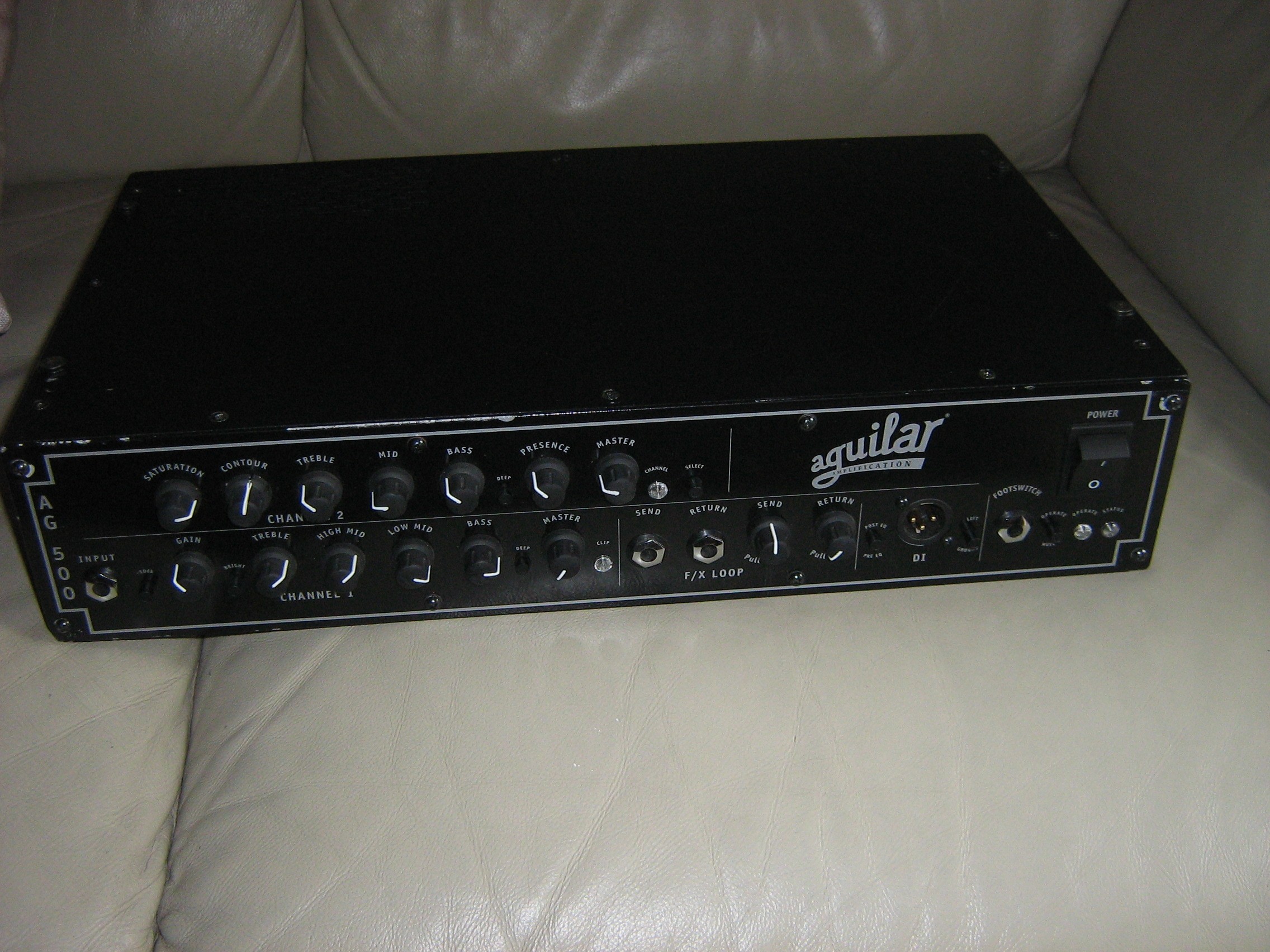 Very versatile and hugely powerful bass head with two separate channels. 500 watts. She has some small chips to the finish on the edges but is in great condition overall and full working order. Shipping UK £12.2 points
 -
Ok, so this is copy-pasted from another bass forum, but for a lengthy review of the Ken Smith BT5 that I recently purchased from Ped as well as a few words on my Eich Bass Board that I also purchased as a result of Ped, please read on. For as long as I've known about (the other bass forum for middle class Americans) , which is the better part of 18 years now, I've wanted a Ken Smith, particularly the older BT shape models which I prefer to the newer shapes. I used to play electric guitar and my switch to bass was fairly recent, I've been buying my dream basses. I think I've always secretly been a bassist, I always coveted exotic basses more than exotic guitars and I always loved the role of bass in a band, but that's a whole other story. Here we are, in 2019 and I'm now a bassist. I actually posted last month in the "What will your next bass be?" thread, that my next instrument would be a Ken Smith. I've always loved the design ethos, the exquisite craftsmanship and forward-thinking design Ken's basses had and have. I think they sound great in live and studio recordings, though I'd never heard or even seen one in person until I purchased mine. Last Sunday night, my brother (who is a long-time member here, India_Sierra) sent me a link to a classified ad for a Ken Smith BT5, for sale near York in the UK, which is about 2.5 hours drive where I live in the north of England. The few pictures in the ad looked great, the price seemed very, very fair for the condition of the instrument and as the seller was the owner of the website the classified was hosted on, I felt confident to make the trip down with the full asking price in cash, knowing the bass would be as-described. As it happend, the bass was in virtually perfect condition with barely a mark on it. It has clearly been loved dearly and pampered over the years. So here we have it, a 1991 Ken Smith with koa top and back, mahogany core and maple layers. The neck is maple and morado. It's the old skool 2 band EQ with all original electronics, all the pots work smoothly with no noise at all and the jack socket was recently replaced. The action is super low but so playable - it gives just the right amount of buzz when you dig in hard but otherwise is easy to play clean. It requires so little strength and physical input that it just feels effortless to play. One of the big draws for me was the Ken Smith sound. There is a characteristic and quality to his instruments that no other bass has, it's present in every Smith recording I've heard. I know Ken has been famously picky about which woods would be offered, he has his ideas about what works in combination to get the best sound and I have to say, I believe in his wisddom. Despite being a large instrument, with quite a large but thin body, the resonance and sustain of this thing is incredible despite it not being particularly heavy. It's very loud and resonant unplugged and harmonics ring out with such clarity and purity. The build quality is flawless. The attention to detail, the thoughtfulness of the design, the amazing way the neck joins the body almost imperceptibly, that famous brass nut, it's beyond superb. Plugged in, it gives that instant Smith sound. I keep it flat on the EQ, pickups balanced 50/50 and volume on full and it just sounds so perfectly even and balanced, with a rich quality to every note. I struggle to put into words exactly what this quality is; it's neither a dark bass, nor a bright one, it's warm but extremely clear and articulate. It isn't harsh, but it's not mushy or soft. I think it is perhaps best described as "balanced". I think a good balance in the sound of a bass is perhaps the most important property I look for, tonally, in a bass. For me, every note must be as loud as resonant as every other note, there must be no dead spots, no strings louder than one another. There must be no booming, overpowering bass and no harsh treble. The Smith delivers on this perfectly. Another remarkable trick is that there is no volume increase when slapping - a bit of black magic I haven't quite figured out yet, I could happily slap on this without needing a compressor to stop volume spikes. It's as if it has some magical in-built compressor. I see now why Ken's basses became one of the session bass industry standards. The EQ is as flexible as two band can be and remains musical throughout the settings, it doesn't quite have the extreme (and IMO generally unusable) extremes of EQ that some modern preamps have. No matter what you do to it, it still sounds like a Smith, so it's not a hugely versatile bass, but I don't need it to be - the sound it makes is so pure it sits perfectly in many, many genres. If I played bar-room blues or heavy metal, which I don't, the Smith wouldn't be the right choice, but for gospel, latin, jazz fusion, funk, pop etc, it's fantastic. The electrical package is one of those things Ken just got right. There's a reason people who buy Smith basses don't tend to want to change preamps or pickups, everything is just so perfectly matched, it just works exactly as it should. The bass came with the original Smith teardrop case and what appears to a 1991 strap, judging by the age of it. I purchased another Dingwall racing strap in brown leather and some Dunlop straploks for the recessed locks. The Dingwall straps are fantastic by the way, I have one on another bass in my collection, but the leather is so thick that getting Dunlop straploks on is a two man job. I know it's early days for me and this bass, but in contrast to another recent thread where a user lamented his dream bass just not working for him, the Smith is perfect for me. Smiths have always held a mystique for me and I've always wanted one. I am glad and grateful for the opportunity to make this happen and of course, I must thank India Sierra for pointing me to the advert - I spent less than 30 seconds in considering to buy it as the vultures were already circling in the for-sale thread. I think it was on sale for less than an hour before I snapped it up. As it happens, when I tried the bass at the seller's house, he was using a headphone setup, with headphone running into a digital bass synth / amp unit and an Eich Bass Board underneath his office chair, powered by what looked like a little TC Electronics head. The Bass Board, if you haven't seen it, is a board that you stand on, or sit on with a chair as you play. It has two incredibly powerful drivers which take your amp signal and turn it into vibrations that you feel through the board, but the attenuation of the vibration is so perfect that you can literally feel the music in your body as you play. The Bass Board is also incredibly quiet - standing on it gives the impression of playing bass in front of a cranked up huge rig, if you've ever played a huge rig or been to a really loud concert where you can feel the bass in your whole body, that is what this gadget gives you. It has useful applications for people using IEMs during gigs who miss the feedback of "feeling" the music from their amp, but I just liked it for home practice. The engineering is spot on, when standing on it felt like I was standing in front of a huge rig, yet when not standing on it, I noted that the vibration bleed coming out of it was absolutely minimal. It has a headphone input too so it could be a great option for players who have family who get irritated by bass vibration shaking the house. I play a Markbass Ninja 1000W into a Markbass Ninja 2x12 at home, I've got some wattage to spare, so I've purchased myself a Bass Board for home use. I don't spare the decibels at home, but even at moderate volume levels the Bass Board creates an illusion of playing really loud, as if you've just walked on stage at Madison Square Garden (or the Baked Potato if that's more your thing). Sadly the speakon cables I had at home aren't long enough to connect it to my Ninja 2x12, so I've had to order another cable and I can't use it until that arrives. If you ever get the chance to try one of these Bass Boards, I urge you to do so, particuarly if you play live with IEMs and no amp as a monitor on stage with you. Even if you just want to make your home practice session feel like you're doing the closing set of the Montreux Jazz Festival, this thing will not fail to make you smile. Thanks for reading if you made it this far. I hope if you have a dream bass, that you are able to make it happen. Life is too short to settle for less. If you have not played a Ken Smith then you absolutely must. I've been lucky enough to play and own some fabulous instruments and this is better than them all.2 points
-
A commodity broker friend of mine who played a bit of saxophone in an amateur big band was talking to a client with whom the conversation turned to playing music. After asking my friend what he did he said his wife was a singer. My friend did the obvious - oh, she could come and sing with us. Turned out the client, a Norwegian shipping magnate was married to Diana Ross 😄2 points
-
If I show you mine, will you show me yours.😃 Edit for I blame @Teebs for the smutty enduenue in my posts.2 points
-
Got one on order2 points
-
Classic example of mission creep brought on by personnel turnover. The band has clearly descended into a vortex of ego, narcotics and procrastination so you're better off out of it. Now go find another band, gig yer ar$e off and trouser some wedge.2 points
-
I'll compromise and change the scratch plate 👍2 points
-
150mA should do.2 points
-
Along with buying a mains safety trip plug....2 points
-
Unfortunately this is an argument that is going to go on till the end of time!!!! In my opinion and what I’ve experienced in the difference between my basses is they all have maple necks and quite a few of them have Rosewood boards and some have Maple boards but they have different body woods (Alder, Basswood, Paulownia, Ply etc) and they all sound different but is that because of the timber combinations or is it they all have different style pickups in them or is it they sound different because some are passive and some are active????? So my point is I think the choice of pickups and preamps etc is more important than the timber used, and does the timber really make that much difference to the sound or do we like to think there is a difference to justify the fact that spending ridiculous amounts on custom basses using exotic woods in the necks and bodies will give you the sound you want????? But there again I might be completely wrong!!............🤔2 points
-
You don’t happen to wear a full nylon based stage outfit do you and sweat a lot2 points
-
Like the OP, I've always been a little bemused that the Akai seems to command such high prices from willing buyers, when there is a modern equivalent in the form of the Future Impact which starts with the 9 preset sounds that the Akai provides and then adds a further 90 presets and a whole bunch of options to edit and create your own effects patches with a much more powerful synth engine inside. However simple supply and demand come into play - the Akai doesn't come up for sale that often. And at some point any product that has a degree of scarcity can become a collector's item which transforms its value. You only have to look at classic car prices to see the effect. PS: while I'm on the sibject, a little plug for the FI, if I may: it's better than any multi-fx synth engine I have tried so far, including Helix, @HazBeen is currently on his fourth one (sequentially not all at once, I should hasten to add!); we have an expert in residence in patch creation and editing in @Quatschmacher who has been engaged by FI to create new patches for their (hopefully!) soon to be released Firmware 3.0 upgrade. And our own @GisserD has designed a neat smaller housing for the FI which has sold in numbers both here and in the USA.2 points
-
The Moogerfooger is good fun but there are so many parameters you can change that it's going to take a while to get used to. Now, that SVT 4 Pro..... I just gigged it tonight. It's absolutely awesome.2 points
-
Each to their own, as long as people are happy doing what they do, that’s all that really matters. I teach music, it’s a moment I always love when I show someone something; that Eureka moment when they realise that they’ve just learned one simple thing that will have massive benefits to their playing, cutting out the hit and miss of note selection, the reduction in the hours spent sitting down trying to work a part out by ear. The harmony and theory module of my BMus was one of my favourite. I opted to do a module on my MMus called ‘material form and structure’, which studied scores, and analysed compositions. The theory and ‘nuts and bolts’ behind music is something that’s always fascinated me, it’s really beautiful when you look at it. I’m a little weird though 😊.2 points
-
I wonder whether hofner would still be selling their viola basses today if Paul McCartney had got his hands on a left handed Fender in Hamburg in 1961?2 points
-
Many artists have made gear popular. Frinstance Bob Marley and ganja, Grateful Dead and acid and Doctor Feellgood and amphetamines...2 points
-
Ok so I had a phone call from the so called band leader. He's found a new bassist ( a pro). Bit of a bummer but you have got to take these rejections on the chin. I think if you do this with a good attitude. It makes it easy for them and im one for , if you have someone better that works for the music, forget about my playing, just go with what works regardless of my feelings or playing. That is how great music is created. But the whole situation is a bit bitter sweet for me though. On the one side, I found the drummer and on a practical level we agreed to do soul/funk cover's. The audience recognises them etc etc. Then comes in a new guitarist, and he recommends Dan. A vocalist who plays guitar and has all original music. He takes charge fairly quickly because they are his songs.(change your playing here/there blah blah Fair enough to fit the song). The rehearsals go on week after week. I think there are some funny fags involved, which im not into. Its not my music of choice, that being a mix of rocky acoustic soul stuff, but of course you have to adapt to the genre. Im a funky soul bass player wether that be good or bad, its the music I've listened to since I was 5 years old and thats my style. The thing is you always think its your fault, and that in a nutshell is my conundrum. Im a very very sensitive person so these situations make me Uber introspective. I guess my ramblings are about a question.. How do you deal with rejection from a band. Move on quickly, ? Find another band quickly?. Im currently having drumming lessons to broaden my rhythm section knowledge. end of rambling.1 point
-
 I've owned this rare beast from new, back when you had to wait 3 months for them to be made. Freakish light, huge bottom end and stupidly loud, being capable of delivering the same output as two 8x10's cabs. It needs a decent amp to drive it but nothing crazy. When I used a Darkglass 900w in rehersals I had to switch it into lower power mode if I want to be able to up the gain much. It hasn't been regularly gigged and is in great condition. The sound quality is fantastic, they are pretty special guys at barefaced. The tightness in the low end is remarkable. You will see from the link below you cannot buy these anymore and they don't do anything with 15-inch speakers these days just 10's and 12's. The only signs of ageing are cosmetic and I have tried to capture them in the pictures. The plastic brackets of the handles have faded or been marked, the corner guards have some wear and what the pictures cant pick up is that If you stand in front of it and peer directly down the face of the grill, and the light is just right, you might notice a slight variance in darkness on freshly painted parts that had some light scratching from bloody cymbal stands being lent against it. Drummers! I touched these up with the official barefaced bass touch up kit. There is plenty left and I will include this. The badge looks worn but it's actually that the plastic protector is on still. I'm open to realistic offers but not trades as I'm not in a band anymore. Pick up is preferred. I'm not against meeting halfway by car or posting but it is very expensive. UK postage (48 hr, Royal mail, tracked and signed for) is £87 fully insured, £57 without insurance. Cash or Bank transfer preferred. Paypal only if you pick up the fees. https://barefacedbass.com/product-range/dubster.htm1 point
 -
Similar to the one I've got. They're so cheap and at least you know that the plug you're going to use is wired properly and has an earth.1 point
-
 If you like Thumbs they are one of a kind and you can’t go wrong with them. Been gigging a Thumb since ‘971 point
 -
Did you follow each of the steps very carefully? It seems that all the cases I have seen regarding this message and locking up is because certain steps weren't followed. You should see this message which will pass, but only if you had prepared your update correctly. Mine went through seamlessly - good luck! P.s. If you aren't already on the Helix for Bass Players Facebook page, go have a look there too as there are countless posts about updating. Good luck and, it is fixable.1 point
-
Very nice, but remember the 5 refers to the neck type (i.e. a P bass), not the day of the month.1 point
-
I love gigging. I play covers in a pub band and record every gig so I can watch and listen to the whole thing all over again the day after. I note what sounds good and any errors I make. Even though the material is quite unchallenging I have used the experience to sort out two longstanding problems: my stage presence, and singing live. I look forward to an evening's gig all day and I often like to have a haircut before getting ready. It is without a doubt the best hobby I can imagine. And the money pays for my singing lessons and more basses.1 point
-
I have never been sacked but the band dynamics always change when a strong personality comes into a already set up band. Thats if they get away with it of course! My band had 2 passive members who never really opened their mouth and me who didn`t like the way that the new member managed to weasel his way in and basically take over through time. So I left before it got nasty. You have to move on and get back to playing the kind of music you like, it might take a while as I don`t know what the scene is like round your way but it`s got to be better than being unhappy, playing music that isn`t your bag and isn`t the band that you started. Good luck in whatever you choose to do.1 point
-
Ok that's several things to check out then! SVT 4 Pro, Moogerfooger, ZeroAmp BDI You've clearly not read the script have you?! The Stomp is supposed to save you money on pedals, not cost you extra! 😂1 point
-
Maybe suck it out with the hoover hose 🙂1 point
-
Used to cover it in a band many moons ago 👍... I'm leaving it for somebody else though, because I don't have any new clips ready yet. That Incubus song you did was driving me (and the Mrs) mad all day yesterday!1 point
-
And so it's begun... Just purchased Squier Jazz Vintage Modified in white. Thanks everyone for your help, amp and pedal suggestions next. But that's it. I swear1 point
-
May well do, thanks chaps! Didn't realise it was such a small company!1 point
-
Damn fine reason to buy a wireless!1 point
-
Is that 4-screw bridge correct? But anyway, with all the decals, fakery, up-branding, who would buy a Fender these days anyway?1 point
-
This will be heading my way soon!1 point
-
Have you tried ringing John? I've found him to be quite tardy answering emails, but get him into conversation on the phone and I'm sure he'll sort you out.1 point
-
No, you need to start at the very beginning. It’s a very good place to start. When you read you begin with ABC, when you sing you begin with doh - re - me. The first three notes just happen to be, doh-re-me.1 point
-
The patch notes say the error message is expected1 point
-
 Having thought carefully I have decided that I will let one of my HD112 cabinets go. I have a CN212 and another HD112 that pair nicely for a super modular rig, but for the most part, at the moment I rarely even need a backline owing to the super PA that my current band are using (IEMs etc). So, this one is up for sale to get some much needed funds back in the pot. As everyone seems to love my SOFA PORN, I have given this tike the same treatment. The cabinet has a light scuff on the grill as can be seen, some small scuffs on the metal corners but generally in very good condition. The fitted official cover has of course been on the cabinet all the time when not in use and show signs of wear too. Collection is very much recommended (I am south of Norwich on the A11 so really easy to get to) Shipping will have to be arranged; I have the necessary boxes already, will just need you to sort and take responsibility for that. Owing to a personal situation here, it's difficult to arrange. Priced with that in mind, I will do a deal for a speedy collection.1 point


.jpg.9891e33a122b11e40b41e351354810fb.jpg)





.thumb.jpg.bf36c6e93eefff39d4b0a452c85a7b15.jpg)


