

Leaderboard


Popular Content
Showing content with the highest reputation on 12/03/18 in Posts
-
Hi everyone, I'm posting this story because it reinforces what a close-nit community that we musicians, and in particular, bass players are. Some of you might have noticed recently I advertised on basschat a lovely Paul Everson Caiman bass for sale. I acquired the bass through a trade about a year ago with a guy who advertised it on Facebook. We met in a service station. I swapped a very nice 4 string Shuker bass for the Everson, had a nice chat with the fella who bought it and returned home. Whilst we were talking the lad confessed to me that he had found the Everson Bass in one of those second hand chain stores that have 'cash' in the title. He knew next to nothing about basses but had liked the look of it and bought it. He then tracked down Paul Everson on Facebook to get some info about the bass. I loved the bass. It appeared to have been treated quite badly. The electrics were shot and it was covered in a weird thick dust. I had it cleaned, sorted and set up and quickly picked up another Everson that appeared on Facebook. That was around a year ago. I recently decided to sell the caiman. Id always had a little niggle in the back of my head about 'Cash _________' and wondered if I'd been a little naieve in my trust. So to put my mind at ease I contacted Paul (Everson) who told me he had sold the bass through the great British bass lounge. I then contacted Drew who was running the lounge and asked them both if any Everson basses had been reported stolen. They both did some digging and came back with a resounding no. Drew had a record of a sale to a lad called 'Justin' who lived near Bradford (I'm in Macclesfield). So back to present day. After advertising said bass on Facebook and BC I received a message from a lad called Justin who explained to me that this was his bass and that he'd had it stolen in early 2016. I immediately phoned him and we discussed at length what to do. Now the dilemma. Justin hadn't been insured and had lost the bass along with a whole heap of equipment. He had been scouring the Facebook sites to try and recover the bass for the last 2 years. I had essentially swapped a 900 quid Shuker with it. The lad who had bought the bass oringally had moved the Shuker on. We were all victims of crime and it was a difficult puzzle to unravel. Justin had contacted Yorkshire police for advice and they had said it was a civil matter. Anyway the final result is that we met the following week and Justin got his bass back. It was a great end to a saga and needless to say Justin was chuffed! Just a big shout out to Paul Everson and Drew for caring enough about this story to help me with my clumsy detective work and a big shout out to Matthew who contacted me on behalf of (current) BBL. The photo below is of Justin (on the left) recieving his beloved bass back! Moral of the story. Cash ___________ are a store I like even less now and Bass players are awesome folk. Andy4 points
-
You dip it in washing up liquid then wave it about to make loads of small bubbles.4 points
-
So, Just because I can, thought I'd "improve " the head amp cabinet of my BTA300 ashdown, spurred into action by the aquisition of MatampGt1Mk1amp'n'cab that is wine coloured with gold faceplate and corners. Besides many hours, this stands me at ninety quid so far, and I think will be great in the lounge on its Orange cab, yes, that's next after this !3 points
-
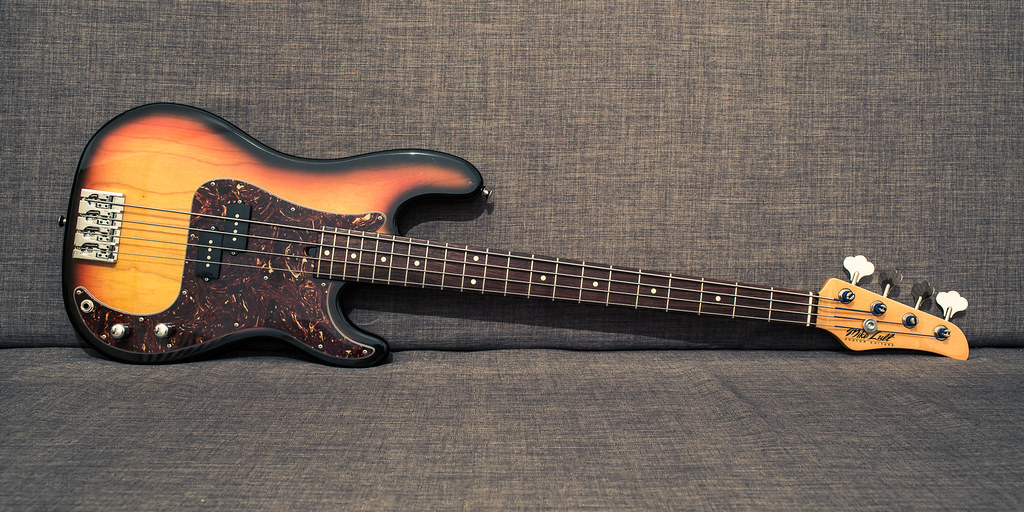 For sale this Mike Lull P4 made in Bellevue WA in 2010. Comes with original certificate. BS6A2419 by Eneade, sur Flickr Gnarly P Bass sound in a lightweight and perfectly balanced package (7,4 lbs). Alder body and rosewood fretboard. Pickup is the original custom made Lindy Fralin. The bass is in very good condition minor small dings on the inside of the lower horn (see picture). Everything works as it should, pickup, pots, truss rod, plenty of life in the frets... The bass is in France but can be shipped in all Europe, PM your country and zip code to have a quote. I prefer a sale but I am not opposed to trades, just try me.3 points
 -
That's because you're confusing a compressor with trousers. Again3 points
-
I regularly gig without a compressor. It invariably ends in hordes of incredulous gig goers RIOTING IN PROTEST because I've ruined their night.3 points
-
For crying out loud, has this turned into a Barefaced thread?3 points
-
.thumb.JPG.edd99a19077ae30f93e8800afbb7a5f8.JPG) Don't be daft man! I live in NW London so obviously I'm a Man Utd supporter ...2 points
Don't be daft man! I live in NW London so obviously I'm a Man Utd supporter ...2 points -
Long story but my ABM didnt have an HPF, so Ashdown sent me one (for free!) They had a spare fully populated board, from an ABM1000 I think, so I'm going to get it fitted. That way it's all inside the head and is custom designed for the amp. Cant beat Ashdown for service! I would stress that although I'm hugely appreciative, I wouldn't expect they'd do it again as I think it was the last spare board in the workshop. So, still feel the 'need' for an HPF but I've had a change in amp circumstances, rather than a new amp really!2 points
-
Now you're just meshing about2 points
-
To be fair, it must be a horrible job working in a guitar shop. Went into the local emporium the other day to find four jibber-jabbering teenage Italian tourists gaggled round their mate who was playing ham-fisted metal licks at earsplitting volume on a £1500 Fender. The sales guy was stood behind his counter, rigidly immobile from the top of his head to the tips of his toes. The only thing that betrayed his utter dismay was a wildly twitching left eyelid. Sensing an imminent and possibly catastrophic customer service failure I made my excuses and left.2 points
-
Come on, tell us - I didn't expect to have to grille you about it.... Sorry.2 points
-
 Ah you can buy the small ones as singles? Seemed to be in packs of two on the website? Although 3 x $62 for my three Ibbys is starting to add up! I best check out those seemingly identical Sadowsky knobs for sale in the “miscellaneous” section that Cam has kindly tipped me off to...2 points
 -
A new letter box to stop junk mail?2 points
-
Not all Squier Affinity basses pass muster. A friend brought me his because the neck was bowed. However much you adjusted the truss rod it just stayed bowed. Concluded the truss had broken. There are a lot of budget basses out there, look at Spector Performer series, or lower priced Ibanez, you may do better than a Precision.2 points
-
Ah - the Dave Swift move.2 points
-
Is it the start of a bee hive assembly ?2 points
-
Perhaps i'm thick skinned, but I wouldn't let this experience let me cut off my nose to spite my face, and not get the product I wanted at the right price.2 points
-
Oh that's good. It's good to be specific, far better than having it and then going around looking for an amp it looks right on2 points
-
My tip for BV's: First get the bassline off pat so your hands can play by themselves and you can dissociate your mind. Then I learn the notes of the BV's by playing them as a pattern of notes on my bass. That way I can remember them as a bassline and always remind myself of what i should be singing. For LVs and BVs, some notes resonate with your chest, some in your throat, some with your sinuses, find out which notes are resonating which part and imagine you are singing through that part of your body. Sing through your nose and mouth at the same time. If you struggle to hit the high notes, imagine you are singing through the top of your head or your frontal sinuses. If you need dirty bluesy sounding vox, tighten your vocal chords. Practice and Fishermans Friends will extend your range.2 points
-
This comment allows me to hopefully explain some of the misunderstanding around compression, so if you don't mind I'm going to dive in a dissect it a little Firstly, and with respect (not wanting to single you out), this type of response suggests that you don’t fully understand the purpose of compression. And I’m not trying to be deliberately patronising here! It's just an unfortunate by-product of me trying to explain all this. So apologies and please bear with me. Unless you are slamming a drum kit with hard New York-style parallel compression, it is very unlikely to ever give someone “a boner” as you put it. Boner causation is just not the purpose of compression, I’m sorry to say. It really is the 'bass player' of audio effects in that respect. Quiet and steady, doing its job, holding things together; no real glamour or glory. That's a compressor. Great! And you can pretty much stop right there, because you've got it - that is precisely the purpose of a compressor. And helping you sit better in the mix should not be understated. It’s the difference between a great-sounding band and indeed, one with potential to bring about boners. Even amongst the female members of the audience. And that's the part where the misunderstanding sets in. Other than very hard compression, which can be done for effect, there really isn't "any other application" apart from helping even out your signal so that it sits better in the mix. And maybe it's because you expect compression to do something else that you find it underwhelming. It's great that people comment on your tone and they most certainly do so because you’re a competent bass player and you use nice gear. But if you were to give me a bunch of your band's recordings and asked me to mix them, I guarantee there would be moments on each song where your bass is noticeably too loud or too quiet - and this would need fixing if I were to do my job properly as a (albeit unpaid amateur!) mix engineer. I could approach this by trying to automate or ‘ride the fader’: manually adjusting the level of your bass to compensate for loud and quiet notes. Or I could use a compressor to do this automatically. And the important thing to note here is that a compressor doesn't just apply to the solo instrument: it's about helping that instrument sit well alongside others playing simultaneously. It's a tool for helping to mix the whole band; not a tool for drawing attention to any one player. Does this matter in a live context? If you, your band and your audience are happy with your sound, then no it probably doesn't. As I’ve said before, compression is rarely essential, but it's nearly always beneficial. If you’re an obsessive like me, who likes to squeeze every % of quality out of a performance (live or recorded), then yes it matters. And that’s why the bass guitar on nearly every recorded song - and played by nearly every professional musician - has compression applied either at source or at the mixing desk. Such pro players have technique in spades and they use compression: because they want to attain the best sound possible. Does a pub band need to do the same? That's a question for you to answer. But if you're spending good money on your instruments and obsessing over string types/gauges, maple/rosewood boards, etc, then you're already obsessing over things that arguably have a lesser effect on your band as a whole than compression. TL/DR: you can mix your porridge smooth, or you can mix it lumpy. It's still porridge. But if you want to add other ingredients, like some blueberries and bananas, then it's best to mix it smooth for a better overall experience. Simple, right?2 points
-
I've done it before and, health permitting, would do it again. Why the question..? Is it so hard to 'get'..? Some folks travel half-way round the world to play a round of golf.2 points
-
Me - cos it always kicks off a great bass chat thread.2 points
-
Well here I go again - Knowing what compression does to live sound is important and will lend confidence in your performance. It is not primarily an effect that you twiddle with to get the sound you want, rather a useful aid in taming dynamics and giving the audience a better listening experience. However, it tends to be employed, (and I'm guilty of this), as another effect on your sound like an extra tone control. A clear explanation: http://www.studybass.com/gear/bass-effects/bass-compressor-settings/ My plucking technique is I hope such that I can interpret a tune from pianissimo to fortissimo. And I don't want to squash out those dynamics. I use the standard Spetracomp and no other effects. From zero I turn the single knob control, (which I assume to be threshold), clockwise, until I can just hear the effect on my bass tone. The effect I hear is a slight thickening of my sound, it sounds warmer to me and that's the tone I like, warm and full, some would say a typical scooped tone as I also dip the mids. So although I use compression sparingly as an "effect" to get the tone I like, I'm also aware of the primary function of compressing my sound in a live situation which is to achieve a comfortable dynamic range of my bass in the mix for the audience.2 points
-
It's surely just part and parcel of the proliferation of satellite TV and internet-based entertainment - along with the huge increase in viewing and listening choice, comes the user's expectation of an entitlement to certainty. There's such a huge quantity of available content out there that Joe and Agnes Average expect to be able to see and hear what they will enjoy with minimal risk, money and effort. Less and less people are willing to take a chance on something that's untried and untested. Add to that a generation that's grown up viewing music as a virtually free commodity that they can access on any device whenever they want, and you've got the perfect conditions for the slow death of original live music, and an increasingly difficult environment for every other kind. I'm in the middle of a theatre tour with a soul/funk band who had a number of chart hits in the 70's. We're sharing the bill with another similar act, and most of the gigs so far have been sell-outs. Even last night, on a rainy Mother's Day evening in the midlands, it was 70-80% full. It's a good show, but the main factor that's bringing in the punters is they know what they're going to get. Minimal risk. Even so, the promoter's twitchy about whether he's turning a good enough profit overall, and has cut costs to the bone, so there's no way he's going to take a risk on something that isn't a dead cert to put bums on seats. The guy's been doing it for years, so put someone less experienced in your local pub/club/venue, and you've got a recipe for disaster. Add in the current economic uncertainty, and the big 'name' bands (who make most of their money from touring now) soaking up a big chunk of the disposable income of the remaining gig-going public, and it's no wonder audiences are thin on the ground further down the food chain. It's rather depressing, but I've no idea what the answer is, or if there even is one.2 points
-
then that is the fault of all of you for not supporting original music. If EVERYBODY played in cover bands, who is gonna write the music for them to copy? Original bands here get more than half a dozen friends, don't be so condescending. Go out and see one yourself, you might hear something new lol2 points
-
 Hey guys, Due to severe financial hardship I'm put in a position where I have to sell some of my equipment. For this thread, I'm selling my SBMM SB-14. The SB-14's (now discontinued) were manufactured in Indonesia while the Musicman's in California, US. The SB-14's are the budget-oriented basses for the Sterling design, built with lower quality woods and electronics while perfectly maintaining the trademark Musicman Sterling sound It's in a very good condition, a very versatile bass and it has a great tone. Thanks to the 3-way switch you can get a very wide range of tones with the trademark musicman sound at a fraction of the price. Bass specs : Body: Basswood Neck: Maple Fingerboard: Rosewood Pickups: Music Man Humbucking with ceramic pole pieces and hum-cancelling phantom coil Preamp: 3-band Active Preamp: Volume, Treble, Mid, Bass Bridge: Music Man designed Tuners: Open Gear I prefer collection but can be posted as well at the buyer's expense. Let me know if you need any additional info/pics/sound demo. Contact : Phone : 07375301744 Email : [email protected]1 point
 -
I recently got one of these. 600w into 4 ohms. Its just LOUD, !! warm, and very light, built like a tank. Really cheap if you can find one.1 point
-
I don't mind sifting through the options1 point
-
Just two large alumin(i)um & three small. They were NOT cheap with shipping - $62 approx. But I think they're a great improvement & the kids don't need to eat every day, do they? This was my 2nd Ibby - I had the SRFF805 but it was just too flat -sounding with the Bartolinis. The Nords are a huge improvement but I recorded with both it & my Jazz the other day & the Jazz honestly blew it away!1 point
-
 Way better looking I owned an '84 around the early 2000's , and i've kicked my own head for selling it. Single , beautiful sounding Bill Lawrence pickup with genuine Ebony cover. Tone tone and more tone. Gutted of Oxfordshire1 point
 -
Ah so you're the drunken busker round my way?1 point
-
I had to double-check that was the same Family that recorded Doll's House and Song For Me - quite a change in their sound over the years! (But yeah, that John Wetton bassline is superb, isn't it?)1 point
-
Never thought of that. Ive got plenty grille left ill maybe make something just for that1 point
-
Giant spaghetti maker?1 point
-
Blunt cheese grater?1 point
-
what a cab it is too, never need to look any further............1 point
-
 Hey Prowla, go prowl around another chat forum....and also read the description on the upgrades. Have a good evening!1 point
 -
I've found the HB PSU to be really good. Completely silent even though a couple of the pedals are daisy-chained as it only has 5 outputs and plenty of juice to run everything on the board at once if I wanted to. Not a Pedaltrain type board though I'm afraid - it's all above ground. Here it is anyway such as it is1 point
-
1 point
-
Just had a nice meet up and chat with @alinbassplayer and walked away with this beauty! BTB1206 in natural, such a nice bass to play. A bit more deep and growly than my Yamaha (which snuck into the second pic) and also a tad lighter. Haven't changed the strings yet but already loving the sound1 point
-
I'm sure this all makes perfect sense and I appreciate your sterling efforts, but despite my near (evil) genius IQ and Mensa membership, you lost me at I will.1 point
-
Not really interesting. Just evidence that we bass players are perhaps deserving of being viewed as the ‘slow learners club’ amongst musicians. PS: when I can be arsed, I’m going to post a thread explaining the necessity of compression with some audio clips to help illustrate; just so this topic can finally be taken out back, shot in the head and buried for all time. Until then, as you were.1 point
-
BC Quote of the month?1 point
-
Here you go - from another forum(!): "The top picture is an uncompressed signal, the bottom one thru a high-end compressor pedal. You can clearly see how it's worth every penny".1 point
-
With the Blend off and the tone controls at 12 o'clock the unit is flat. The tone controls react differently when the Blend is off. What were you running the pedal into? Very different pedal. The Para Driver DI is more open ended and can be used with many different instruments whereas the Bass Driver DI is optimized for bass. The Para Driver has its sweepable midrange control before the SansAmp circuit which gives it more Drive potential. It also lacks the Presence control which the Bass Driver has. It depends what you're looking for. The Bass Driver is popular with players that like that tone and the ability to get it fast. Your playing style, instrument (active or passive) and what you run the unit into (bass amp, console, power amp etc) all come into play. With any sound shaping device it helps to know beforehand what specifically you are trying to accomplish. It seems like many players that complain about the unit just bought it without a clear idea of what they wanted. It wasn't designed to be a distortion box although many use it that way. It's a DI/amp emulator and needs to be approached as such.1 point
-
...and now I have a Malekko Scrutator. Definitely not a one trick pony! The ability to map the expression pedal to the filter, bit rate and Q, in any combination is a real game changer in a compact pedal. The initial temptation is to really slam the parameters and do massive filter sweeps with the expression pedal, but that will wear off I'm sure. Theres definitely Wah/Envelope tones in here. I can't fit my Rat on the board anymore though.1 point
-
HI guys, Sorry to be about six months behind on this but I came across it while looking up Proamp. I bought a Select 130 Bass head direct from the factory in the 80's. I've still got a copy of the pro amp price list and a factory sales pamphlet. (£194 direct from factory and £296 RRP for the 130 watt head). I gigged the amp for many years and it was totally reliable. Still have it as a back up to this day.1 point
-
Here's a good one. Might not be your style. I think it rules. I have a Malekko Scrutator in the post...1 point
-
Sometimes more like this: I might not be much help on this one: I've done white and I've done bursts ....but I've never done a white burst! And I'm not entirely sure how I would go about it. And generally I don't spray. And I generally don't grain fill in the conventional manner. Basically - my approach tends towards the unconventional in a number of aspects and so I would probably start from a completely different place. There are some pointers I've gleaned from the various trials and tribulations I've had that might help, though. But I emphasise these are just what I've experienced...other people may have had more success than I did: I think linseed oil is a bit of a problem. Tru-oil - which many guitar makers use - is a polymerised linseed based product. Basically, it sets hard over time. I'm not sure that linseed oil by itself does. As such, there may be problems trying to overcoat linseed oil with many things - although perhaps OK with Tru-oil Personally, I steer clear of nitro-cellulose. You HAVE to wear a properly spec'd respirator - it is pretty evil stuff - but more than that, it is very, very particular to what it is sprayed on or what is sprayed on it. And it blooms in damp weather...and and and Yes - the spray cans from halfords, etc, will work fine and give you a huge choice of colours and a decent clear coat. Always start with a primer, though, if you are using solid colours. If you are spraying onto bare wood, use a clear sanding sealer. You still need to wear a respirator when you are spraying and follow all of the other precautions stated on the tins but functionally will work and, in my experience are less sensitive to humiditiy, etc.. They can nevertheless be still reactive with previous coats and other products. The folks above who say 'always test on some scrap' speak wise words You can produce very good results for many effects without having to spray... The good thing, though, is that generally at worst, you can fairly easily sand back to the wood and start again. Sorry I've not been more help on this one Andy1 point


.thumb.jpg.268e7fda3232f90e354a087c75b30ba9.jpg)


