All Activity
- Past hour
-
I mean...it's a precision style bass. Of course it's going to look like a Fender 😂 Imagination isn't the name of the game here. Execution is.
-
Ive just got a used Zoom H1n with the intention of recording rehearsals. Does anyone else use one of these for this purpose? What settings did you use to get a reasonable recording.
-
I have played Martin's TE1200 and it's fantastic. Naturally, I was maybe only slightly joking about getting a 2nd cab.
-
Yeah ghostfire, i should have kept the bigger version I had as well 🙄 The case is a pelican im2306 https://www.pelican.com/us/en/product/cases/storm/im2306?sku=IM2306-00001 One on ebay at the moment https://www.ebay.co.uk/itm/406556704434?_skw=pelican+im2306&itmmeta=01KJB7TSWDYBXDPTCC7FAD4A18&hash=item5ea8aafeb2:g:8nUAAeSwPq9pWoXL&itmprp=enc%3AAQALAAAA0GfYFPkwiKCW4ZNSs2u11xC2QyE45n%2FGU0Jvg9QXZapo1wV6Zxxtn4xV3GOSH7t5CnYRAKQJ0n8VNApBfcQtjJX8UVpHGb83lNx2Oeag3NcUC%2BhoFsHF0mTGhy4tQMnlHcBK5E%2FYtQ7GcDUai76klvQdBIofP9ZeMumHAwYUqG1FvCmwonyO9Vd1FaniTMiXUWP8iFE2wT7719yGxawpKB5zQbeRq9viMJ4VSvABjQWR5W%2BpHblEUKhkeGI%2Bi8iwFWSIVHesryE9G4Ho5GhoW9M%3D|tkp%3ABk9SR8Ke6-eSZw Pricey but fit duo 2.0, pt nano’s, mono lite’s, d’addario xpnd and the ghostfire. Had one previously and it was a big mistake selling it, so managed to snag another. The Mantle I’m extremely happy with, big gushing post here: https://www.talkbass.com/threads/walrus-audio-mantle.1682191/page-24#post-29491058 basically it’s what l’ve been after for a long time. I’ll probably still play through the anagram for the majority of the time due to the convenience but this small board is my new no compromise rig. At least for now
-
I don't think there are any shoulds or shouldn'ts. If something works for you stick with it. I never use amp/cab sims on my bass presets. I've never found sounds I like with them. The amp sims, for me, have always introduced a lot of noise I don't want. I have just set some EQs and compressors as favourites and I get sounds I like in that way. Then each preset has consistent volume and tone to start with.
-
Glad that it's gone back to the right place. It is just a bit mad how it all happened so quickly? I'm currently dealing with parcel that's got "lost" and can only start an investigation after it's been lost for 25 days! This seems all to convenient to be something that was lost and unclaimed to be sold.... The curtain twitcher in me would love to know what the investigation draws, but I think this will be chalked off as a mistake and we'll all move on.
-
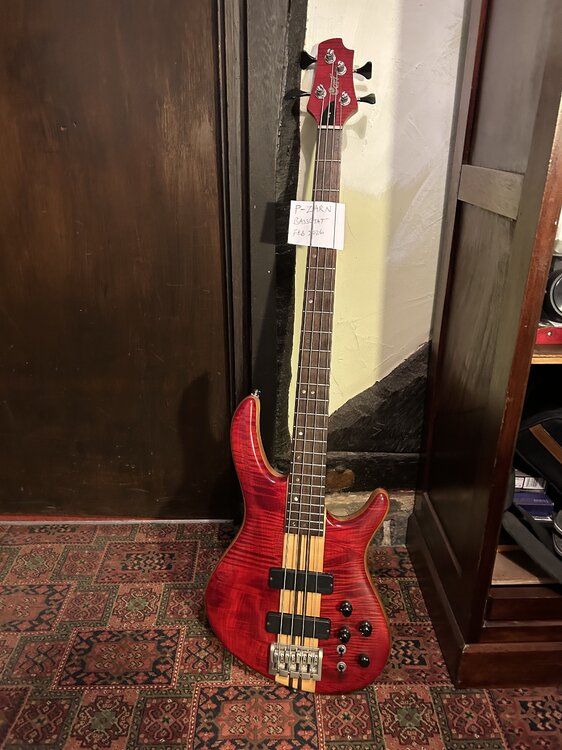 Yes, there definitely is a stray red wire, but as to its function ????. The electrics work perfectly. No grounding issues etc Unless somebody else can provide some guidance ?
 -

 Sent you a DM regarding the Ibanez Tube Screamer
 -
He has a Trace 1200. With great power comes great responsibility. That amp and the single cab could cause structural damage.
-
I saw them there on the Moving Pictures tour; I was near the front.
-
I know this point has been raised many times on Basschat, but I simply can't get away from the fact that ticket prices have become grotesquely over-priced. I wouldn't pay these prices to watch anything or anybody I paid £4.50 to go see Rush in 1980. That's the equivalent to £19.50 today. I've heard all the justifications about increased touring costs ect and I'm not at all convinced. Every age is expensive to those living in it. I'm sure the same argument was trotted out to justify £4.50 in 1980. What makes tickets so ridiculously expensive nowadays is profit for all those concerned. The rest is a smoke-screen. Concerts and tours have become an industry where lots of different businesses, not just the band and their record company, are expecting to make money from. Ultimately that money only comes from one source, the punters who buy the tickets and merchandise. Like with football, there will never be a reset until people stop buying the tickets and merchandise and turn their back on the whole thing. That won't happen and so on it goes,
-
Brill.
-

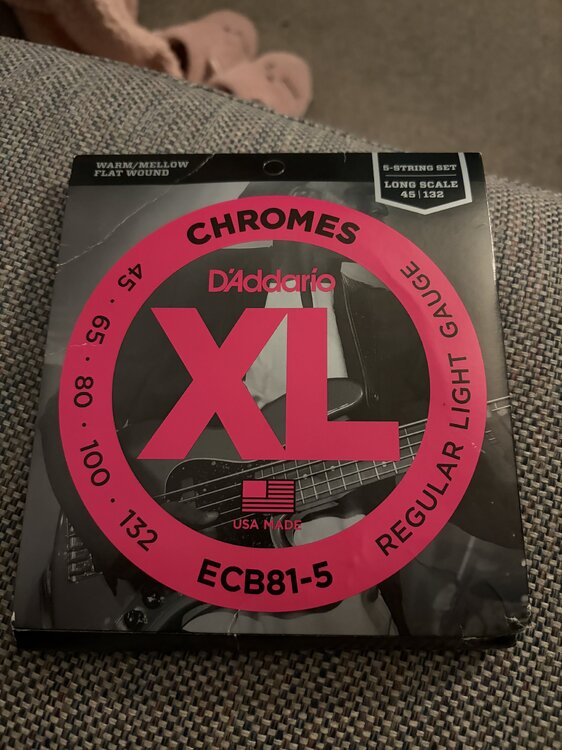 This is a nearly new set of Chromes cut for a 3 / 2 headstock. The B was never fitted (long story). £25 delivered?
 -
Thanks, could well be interested 👍
-
Mike bought some strings from me in what can only be described as a perfect transaction. Great communications, prompt payment and he kindly let me know when they arrived. Thanks again Mike!
-
It is neck through. Does look like a stray red wire ????. I'll open the back up and have another look. There doesn't seem to be any issues with the sound.
-
 Ah OK. I didn’t know there was a difference. I’ve made a call to an old mate, so hopefully go have a look next week. Check it out.
 - Today
-
This is so wrong Martin. The correct course of action is to get a much more powerful amp and a 2nd Barefaced Super Twin and casually ask the rest of the band "how they like them apples?"
-
Tried the Timmy pedal. With no dirt it's transparent and doesn't filter the bass. As soon as you bring the gain up the bass disappears. Which made me think, another solution would be to use a crossover and only distort the treble, so I'm going to try that.
-
Local and tempting..... Is there a stray red wire in the preamp? Is it neck through?
-
I suspect we've all come to much the same.......
-
Nice bass, but then I would say that given that I’ve one of its maple-boarded cousins! Out of the many basses I’ve had over the years my TT SL is pretty much the only one that has received compliments on the sound from every band I’ve played it with.
-
 Any trades / part-ex or just straight sale? Thanks.
 -
Yep, glad you’ve finally got it
-
Hi Apologies for delay. I'm based near Ramsgate Kent