



ikay
-
Posts
2,218 -
Joined
-
Last visited
Content Type
Profiles
Forums
Events
Shop
Articles
Everything posted by ikay
-
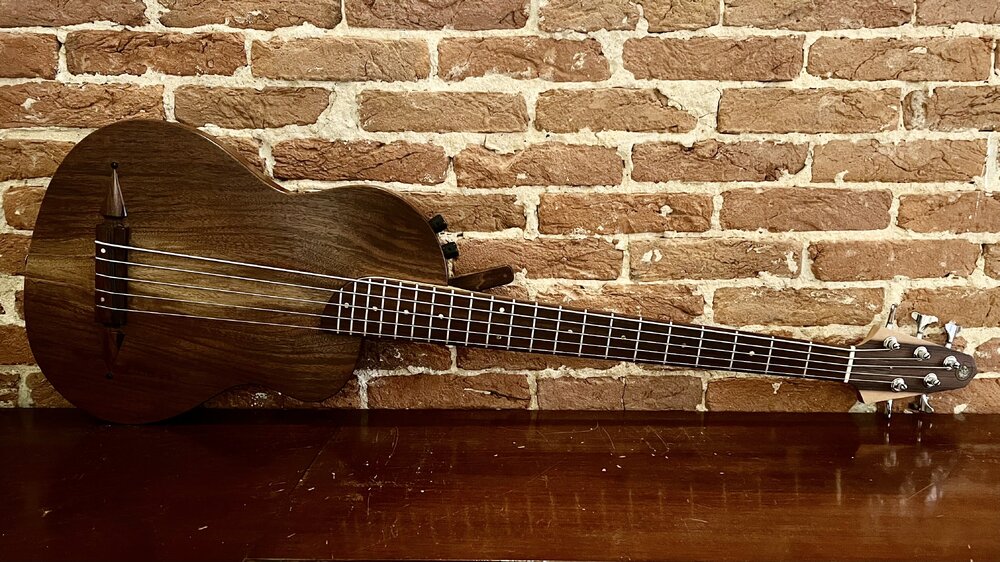 Another ex owner also concurring! Mine was strung with Thomastik phosphor-bronze rounds and had a wonderfully rich organic sound. Beautifully made instrument.
 -
Just bought a SpectraComp pedal from Dan. Seamless transaction, great comms, quick delivery and item in excellent condition. Thanks Dan!
-
Neck weights can vary quite a bit. I used to be obsessed by weight and went through a phase of weighing everything in sight! Looking at my data, I've had clean neck weights (without any hardware) ranging from 725gm ( 25oz) to 850gm (30oz). The heaviest neck I've had was a Warmoth which clocked in at 1.1kg (38oz) - but that one had stainless steel reinforcing rods.
-
Bought an Atlas compressor pedal from Andrew. Seamless transaction, good comms, quick delivery and item in excellent condition. Thanks!
-

TC Electronic SpectraComp Bass Compressor £40 delivered *On Hold* - *SOLD*
ikay replied to danhkr's topic in Effects For Sale
 PM'd
PM'd -
I'm a newbie user of the Neuro desktop editor for the Atlas compressor and could do with some help understanding some of the myriad of editable features (there are a lot!). The first one being makeup gain. I understand how compressors work and the principle of makeup gain, but can anyone explain to me how the four controls relating to makeup gain in the Neuro editor (pic below) function and interact with each other: Auto-Makeup - OK I get this one! Reference Level - I'm assuming this is to specify a 'reference level' (presumably somehow relating to the level of the input signal) for the auto-makeup gain - but in the Atlas user manual it says the auto-makeup feature 'analyzes the level of the input signal' to match the levels. This implies that the ref level should be determined automatically, which seems to be at odds with having a separate control to specify a preset ref level. In practice, when using the Atlas with auto-makeup ON (as in the factory presets), and moving the blend control from fully wet to fully dry, I'd expect the levels to be much the same, but with my bass (standard passive P) the wet signal is noticeably louder than the dry signal with some of the factory presets (eg. Studio Snap Bass). Makeup Gain - Does this override auto-makeup, or does it just add a +/- trim to the auto-makeup level (or the reference level)? Auto-Makeup Include Attack Knob - What does this mean? Thanks for any input!
-
Just bought a Cali76 from Ian. Splendid chap to deal with, good comms, super quick delivery (arrived next day), well packed and pedal in excellent condition. Thanks Ian!
-
 PM'd
PM'd -
The good news is that the SPB4 pups (I have a set) are themselves very nicely built with properly earthed pole pieces! Tonally they are quite different to the vintage voicing of the SPB1 - they have a pronounced low-mid bump and less highs. Very nice pickups with a distinct vibe, but not as 'general purpose' as a regularly voiced P.
-
Listening to the hum at the end of the above vid, I agree with Jean-Luc re making sure the bass is fully shielded before replacing the pickup.
-
Here's your pic with the connection schematics added above each board. The pickup wires connect as you say to the BTB board on the right. Looks like the battery wires go to the floating connector with the red and black wires. By convention the red wire should be +ve but you can check that by tracing it back to where it's connected to the board and comparing with the schematic.
-
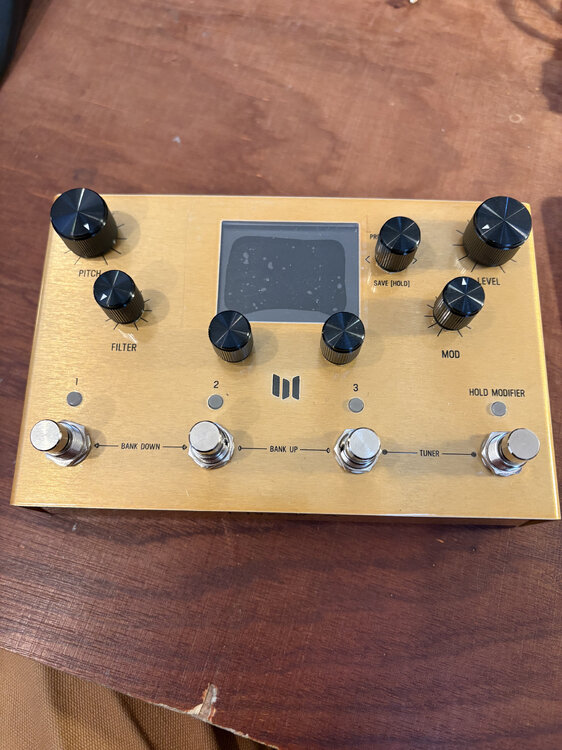 Thanks. I found a youtube demo of prEDITOR which gives a good overview of library/patch management and a (briefer) look at the sound editing features. Quite a lot of different screens to navigate through to access all the synth parameters but generally looks pretty well thought through.
 -
Does the desktop app come with an onscreen editor for tweaking all the synth parameters and creating sounds (like the FI4) or is it just for patch management?
-
I take it you've already found this? https://britishaudio.com/products/trace-elliot-va350-and-va400-user-manual
-
Rickenbacker bridge pickup height screws
ikay replied to Woodinblack's topic in Repairs and Technical
The bobbin should be attached to the caddy by two phillips head screws as in the pic below. The screw holes in the bobbin are often slightly off centre from the factory, hence the wonky alignment. Easy enough to adjust by slightly filing out the holes in the caddy to provide enough wiggle room to set it straight. -
😅 haha, the holy grail of bass provenance!
-
I was thinking the halo outlined the shape of the coil. The curious thing with your pic is that it doesn't seem to show any mag flux along the centreline where the poles are.
-
This is curious. Here's a flux pic of the Benedetti SCs in my Excess and the mag field (blue) shows through the centreline of the pickup where the poles are. On the pic above the flux seems to be showing as a halo rather than through the centreline. Having said that, I don't know why mine are showing a white halo!
-
 Thanks
 -
I've used Accu.co.uk several times to source replacement screws of various sizes. Excellent service and you can buy small quantities. If you know the thread size and length of the screw you should be able to find a replacement there. Here's an example: https://www.accu.co.uk/metric-cap-head-screws/3864-SSCF-M6-10-A2
-
What does it weigh please?
-
I've just looked through the FI V4 manual, partic the editing section, which has slightly blown my mind! Very impressive synthesizer engine - 4 oscillators, lots of filter options, full ADSRs etc. I really like the PC editing option as well, much more intuitive than having to select each parameter one at a time using the tiny screen on the pedal. I wish the Enzo X had that option. On the other hand, I've watched quite a few demo vids of the FI but none of them match up to the huge lush sounds the Enzo can produce. I guess a good part of that is down to it being monophonic vs the 6-voices of the Enzo. Compared with the MXR bass Synth though, the FI offers much more in the way of sound building and editing capabilities - not to mention 99 footswitchable patches and Midi in/out. Available from musicstore.com for £261 which is cheaper than the MXR. Why is everyone so excited about the MXR when the FI can do so much more for around the same price or less?
-
The MXR Bass Synth is out of stock everywhere so I thought I'd look around and see what else I could find and came across the Meris Enzo X - https://www.meris.us/product/enzo-x/. Has anyone tried one of these? It's around twice the price of the MXR (£599 at Andertons) but the synth engine and tweakability is much more comprehensive than the MXR (eg. full independent ADSR envelopes for filter and amplitude, 6 fully polyphonic voices available simultaneously, can be triggered directly by bass/guitar or via midi, 99 footswitchable memory patches etc). It sounds fabulous, here's a demo.
-
Here's a better comparison with the 4003 pic adjusted to have the same overall length. Much easier now to see how they've cobbled it together with minimum new tooling and just repositioning the bridge and bridge pup.
-
Having done a side-by-side photo comparison, the proportions and layout of the 4030 look quite different to me. The overall length (bottom pin to top of headstock) of the 4030 appears to be longer. I wonder if that's just an illusion - perhaps the 4003 pic wasn't taken exactly face on? Both pics are from BassDirect. It would be interesting to know if the overall length is the same as a 4003 if BD could do a quick check. Regardless of that, the top strap pin on the 4030 is opposite fret 15 which, I would expect, makes it more prone to neck dive. On a 4003 it's opposite fret 13 which (to me) is already a bit marginal. It would have made more sense to move the bridge somewhat less severely to the right which would have shortened the overall length and improved the balance. The other difference is pickup positions. The bridge pup looks about right but the neck pickup is proportionally in a completely different position to a 4003. I actually prefer the idea of the neck pup being closer to the bridge, but it will sound different. Overall it looks like a bit of a half hearted attempt at a true short-scale version. I certainly wouldn't pay a premium for it over a regular Ric!


