


itu
-
Posts
4,390 -
Joined
-
Last visited
1 Follower

Recent Profile Visitors
9,125 profile views


itu's Achievements



-
MM. No doubt. I might cut highs just a bit, but other than that MM sounds better to my ears. I like the detailed test setup, and nice playing (even through YT). Well done.
-
We could... FLTP 1000 km is a real life test for electric cars. It is something completely different from what car manufacturers are telling us. Any bass meeting could make tests of the amps and cabs and publish results to some webpage like BC. Requirements and tests are pretty straightforward if someone has a 1 m stick, a noise source, and a decent audio analyzer.
-
@MostLow: usually it is feasible to fill the preamp side, and adjust the volume to the desired loudness. This way the noise level is low and the preamp works in its best performance level.
-
Just found a deadspot on my Dingwall. I am annoyed.
itu replied to kwmlondon's topic in Bass Guitars
Even high quality brands have to deal with physics. -
My modest understanding comes from Sony broadcast cameras. When the power supply broke, there were no reusable parts available in the PSU. This was very evident when the PSU blew around its metal case. Not every time, but every now and then. If any part would break, it most likely will take a few along. Fixing such a unit to its original specs would be a chore.
-
Lovely!
- 15 replies
-
- 1
-

-
- rickenbacker
- rickenbacker 4005v
- (and 1 more)
-
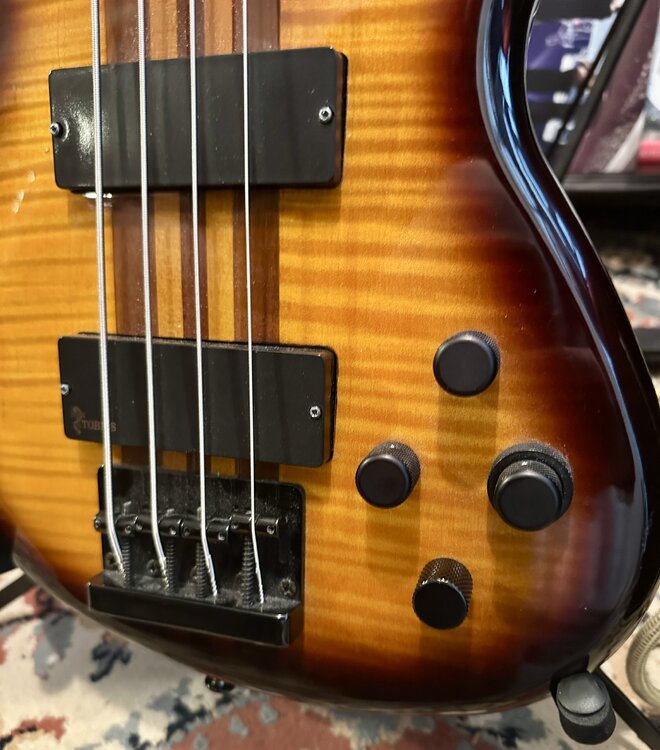 GLWTS "...but you can call me Toby, if you like."
 -
Getting my notes onto my new tablet help please
itu replied to police squad's topic in General Discussion
Oh yes, download some scanning SW (app) to scan notes from books. A very useful extra. -
Getting my notes onto my new tablet help please
itu replied to police squad's topic in General Discussion
If you want a very good SW to read music from different formats, I suggest you to buy the Mobile Sheets Pro. There's no monthly fee, just pay once. Very functional. If you need (I do) a page turner, check Pageflip Dragonfly. It is small, very quiet (studio use), simple to use, and batteries last really long time. There's a 4 button version available, too, but I found no use to those two extra buttons. I use these with my Android tablet. I have +3000 scores there. Setlists are easy to do, and you can import a few formats to the SW. If you have books in PDF format, you can make sidecars to index big books to individual notes. No more papers! -
The guy who did the solderings... I wouldn't call him Ironman.
-
@godathunder, I think you are asking right questions. First of all, class D amps are measured in a different way than old A, AB, or B class amps. Then the distortion figures may differ a lot from manufacturer to another which offers a big variety to publish watts. Watts are funny, because everybody understands one figure - that is only faintly related to loudness. Where are discussions about sensitivity (dB @ 1 W/m), loudness (dB), frequency response (50 - 4000 Hz ±6 dB) and so on? The only reasonable way to measure loudness sure requires a system (amp + cab). Sometimes it would be very eye opening to arrange an open air test session where anybody could bring a system to the place and then someone with decent equipment and noise source would make measurements.
-
Anyone know a Luthier who refrets Graphite Necks?
itu replied to HeadlessBassist's topic in General Discussion
Phenolic resin? -
Anyone know a Luthier who refrets Graphite Necks?
itu replied to HeadlessBassist's topic in General Discussion
Is this a factory fretless? Has to be a short scale, because of the Bendwell. -
I might read the above like: Two speakers from the same manufacturer that look the same but have different impedances are two different speakers. Depending on the amp it is hard to say which speaker is really louder. Lower impedance may be harder load for the amp and therefore higher impedance cab can be even louder.
-
Just found a deadspot on my Dingwall. I am annoyed.
itu replied to kwmlondon's topic in Bass Guitars
Exactly. While the theory about dead spots is true (nearly every particle and shape resonates) the snake oil thing is usually too easy to add to the texts. Bigger is bigger, and more is more. That product page had lots of text, even though the basic theory is about resonance, a stick attached from one end. If you change any parametres of it (length, weight...) the system changes. One way to tune the system is to change the tuners. One by one, or all at once.


