


-
Posts
479 -
Joined
-
Last visited
Content Type
Profiles
Forums
Events
Shop
Articles
Posts posted by DGBass
-
-
17 minutes ago, BigRedX said:
I find with a slot loading bridge it's more difficult keeping the strings in the slots while getting up to a suitable tension that they will stay there by themselves. This is never more obvious when trying to replace a string under pressure like at a gig.
Sadowsky's Quick Release designed bridge is a good option to help with this issue and generally quicker string changes. There isn't any need to thread an entire string through and the ball-end clicks into place securely until the string is tensioned. Not sure how available they are to buy as a part, I think they may have had a version on Thomann for around £50-£60 recently.
-
I think Ashdown are doing good things of late with more of their range being built in-house in the UK and probably to order. They also appear to be standardising the appearance of their most popular ranges with the ice blue look that was previously reserved for ABM. If I could be tangential for a moment, The New UK built RBM was recently preceded by a PBM ( portable bass magnifier ) also in ice blue, also made in the UK, and which is I think a replacement for the Ashdown Ant. If being UK built makes their amps even more reliable, and with longer service lives, then it can only be a good thing IMHO. My own rack mount ABM 600 which was a UK custom shop order a few years ago still makes me smile every time I use it knowing it was made here in the UK, and that legendary support if needed is just a phone call away.( it hasn't needed any) I'm also still using a twenty eight year old ABM 400 that still has the majority of its original component parts and which still works perfectly. It was made at a time all their stuff was UK made, so maybe there is something to that? I more than likely won't be around in twenty eight years time to see if folks are still gigging UK built RBM's regularly but I suspect there will still be a few Ashdown amps from this era knocking around that Ashdown will still be able to offer some support for whether Chinese made or UK made. 🙂
-
 3
3
-
-
2 hours ago, Beedster said:
Where did you buy yours @DGBass?From the Thomann web site. These were I believe first introduced for 2009/2010 model American Deluxe Fenders.
-
 1
1
-
-
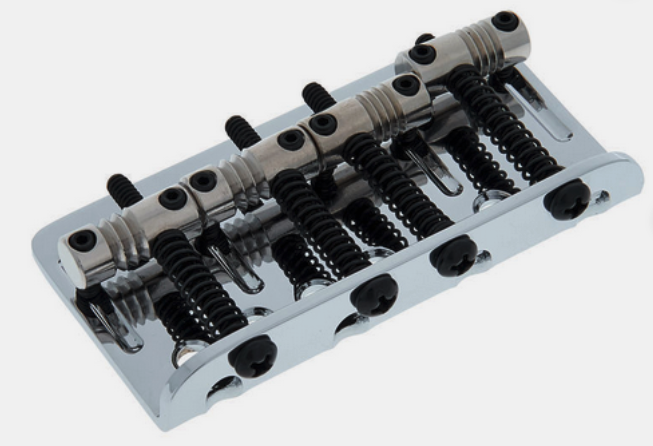
It's a reasonably pricy option but I've used Fender's deluxe USA stubby bridge to good effect on an older American Fender bass. Has the grooves to limit saddle slip and the saddles are multi grooved to help with string spacing/alignment. Plus it looks original on a Fender without changing the basic aesthetic. Does top load and string through as well. It's a three screw fixing. It's a very neat lo-bling style bridge. I might add it didn't really sound any different from the original Fender style bridge. Feels more solid if anything.
-
1
-
-
Looking good😎
-
1
-
-
Nice one G. A great find and looks just like my N8 P-Bass. A classic colour combination for a Precision, hope you enjoy playing it and hopefully it's a keeper. Question: does it have the lightweight open gear tuners that were more 2012-ish, or the big chunky cast tuners on the early year 2000's Fender USA basses?
-
The GP12's are reasonably complicated amps. Probably why I prefer GP7's but I do have a series 6 GP12 and a 250 GP12 SMX, both hum free. If I had a penny for every minute I spent trying to track down a hum on a GP12 I'd probably have quite a few quid by now. There are at least three power supply points that have smoothing caps, the output board, the tube circuit, and the pre-amp board. Dublier caps on the output boards are in my experience very durable. Unless they are obviously leaking or bulging they don't usually cause problems even after 20-30 years. Not to say they can't cause issues. Worn dirty jacks and loose or tarnished ground points are very common noise generators on these amps after many years and IMHO always worth a check, especially the back board, before getting into scraping hot glue from boards and components! 🙂
-
4
-
1
-
-
I owned a later 715 peavey era GP7 amp with the BF-4 foot switch ( there was also a BF-6 for GP12's, both with the DIN multi cable). I seem to recall that the best way to set up was to connect the foot switch before powering up and also ensure all the switches or buttons were in the off/out position on the amp front panel and not to use the front panel buttons at all while things were powered on. Slightly off topic but the same thing applied to Ashdown's remote foot switch for ABM heads, always connect before powering up and leave all front panel buttons in the out position.
-
1
-
-
The BH250 was the first class-d head I owned and it's scary to think these have been around for over a decade now. Great little amps and featured packed for not much cost. Surprisingly loud as well for such a compact unit. Also make a great desktop recording interface and home practice amp with the headphone out. I've just bought another small class-d head or I would have jumped at such a bargain. Jezz is a top dude, buy with confidence! GLWTS.
-
1
-
-
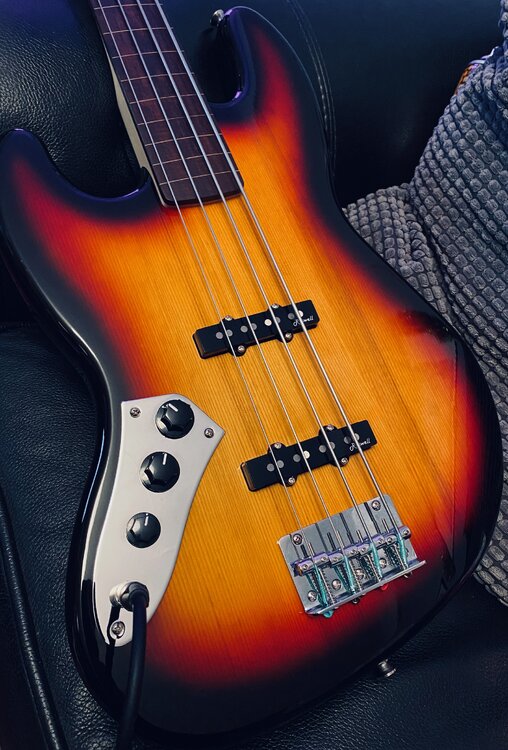
Bought a used one of this exact model recently and have found it to be a very full sounding instrument. The previous owner bought it direct from Thomann and hadn't really taken to it. It was more or less as it came out of the box when I acquired it. A few things I would point out worth checking with regard to setup that may improve how your bass sounds. The original strings on my example were a set of unremarkable sounding round wounds. I swapped these out for a set of 45-100 Fender stainless flats, my preferred string on my other basses as well. There was an immediate improvement in the sound. The pickups on my JB40 were also screwed as low as possible so re-adjusting them up made another big improvement. I find the pickups sound quite good and see no reason to change them. The neck is a fairly chunky affair on these and my bass had a slight back bow which wasn't allowing the strings to vibrate properly. A little tweak on the truss rod to loosen tension and add a little neck relief worked wonders as well. For the money these are quite remarkable instruments. My JB40 is very resonant and I think that may be in part due to the very heavy ash body. It does big deep lows and has that fretless mwahhh by the shed load, especially using the bridge pickup. If you aren't keen on checking and adjusting settings then it would be worth asking a bass tech to check the setup for you before spending any money on replacement bits🙂. Sometimes a little bit of setup time can make all the difference.
-
4
-
-
Such good amps and the ice blue finish EVO IV's were all made to order UK units. A whole load of amp for the money and it's in a case as well. Bargain! GLWTS.
-
1
-
-
26 minutes ago, Homatron said:
Is it good for metal?
I would say so, if fretless metal is your thing.
-
1
-
-
I've scratched a lot of itches gear wise and ticked off a few things on the bass bucket list this year as well as having a big clear out. It's all been good though. Best of the best was acquiring my LFSYS Silverstone II cab. It really has been a game changer and has shown the way ahead for me, which is lightweight well designed and great sounding cab to use with my collection of class A/B amps. Anything I plug into it sounds great which has unfortunately made it more difficult to rationalise as much as I hoped this year. I still have one or two itches to scratch so I will not be joining the 2026 gear abstinence thread🙄.
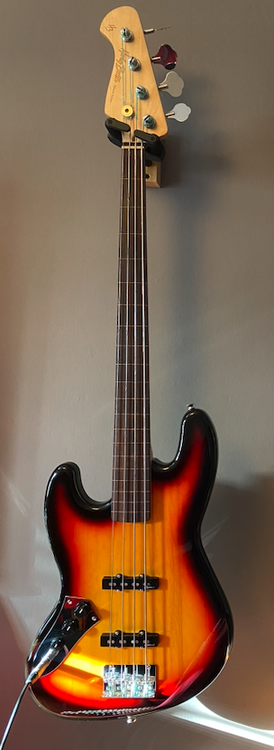
Worst of the best goes to a used bass I bought in a car park meet-up on the south side of Glasgow. The bass in question was a Harley Benton JB40L Jaco Pastorius kind of thing. Actually it was mint, the fit and finish, the build quality, the playability, and the sound were all astoundingly good, I'd even say excellent. That I paid half its retail value for such a well put together instrument is mind boggling. It really has no right to be so good for so little even at full retail cost. The only reason I will place this as the worst of the best is its weight. 5.4kg is unfortunately not very giggable for me although its fine sitting down to play it. No idea what the body is made of ( cast iron?) but its a proper slab of something very dense.
-
4
-
-
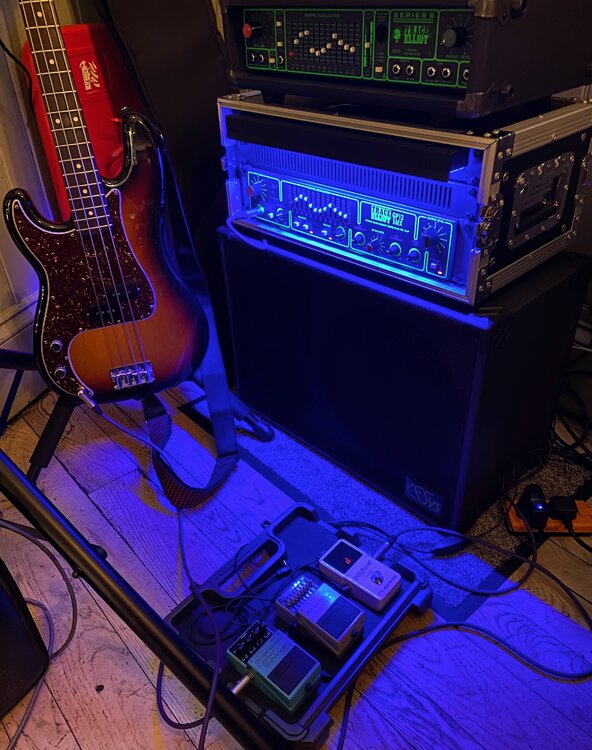
Rig for my final scheduled gig of 2025 last night. I thought I'd break out the Christmas lights since it's that time of the year. Cab( Silverstone II) and pedals same as usual, AH250 SMX for the first set, and a Series 6 GP12 for the second set. Bass on the night was my 90s USA Standard P-Bass. All sounded rather splendid together. Merry Christmas rig posters and Basschatters

-
9
-
-
I can't think of any reason to avoid Ashdown amps. I haven't really come across one I didn't like that didn't have a usable tone with minimal fiddling of the tone controls. ABM's are a favourite in particular. I've owned and used ABM200's, 300's, 400's, 500's, and 600's. 900's and 1200's are just double 500's and 600's and not really on my radar. I currently use a rack ABM600 and it's superb. I do like the early mosfet powered units and just recently purchased a late 1990's ABM400 from @harrison from this here parish. I've fully restored it and these early mosfet units have a really unique tone while still having that same ABM grunt and presence all ABM's have imho. All I need is an early ABM200 to complete my collection of old school iron and I'll be a very happy bunny. Imho, there's no gig you couldn't play with a good ABM 😁
-
4
-
-
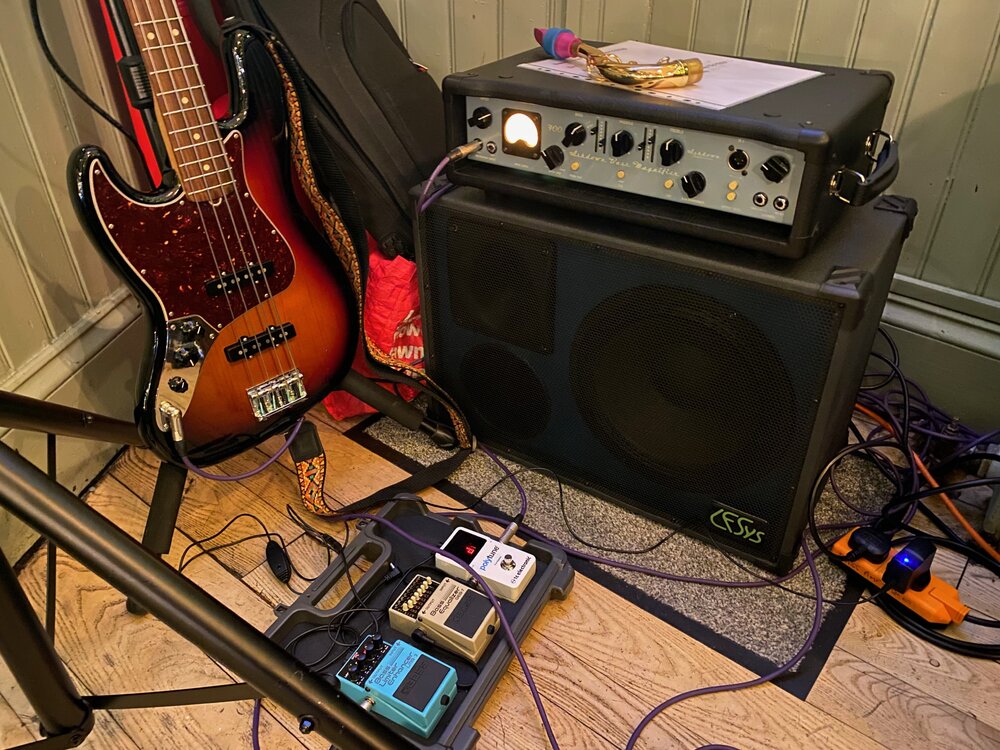
I should probably do a review of the LFSYS Silverstone II as I've been using it for a while now. Needless to say, its revolutionised my gigging experience and afforded me more compliments about how the bass sounds than anything else I've used previously. I just need to work on my actual playing now😉. Shout out to Dave Green @Ashdown for his assistance and wisdom in helping me get a lovely old late 90s Mosfet powered ABM400 fully restored in time for today's gig. It was literally bolted together the day before the gig with no real testing. It worked flawlessly, didn't break a sweat, and sounded immense with the Silverstone II. Bass on the day was my lefty USA Standard Jazz.
-
9
-
1
-
-
Bought some vintage Ashdown stuff from @harrison and all went very smoothly. Excellent comms, quick transaction, and very happy with the deal. A sound bloke to do business with, many thanks, DG.
-
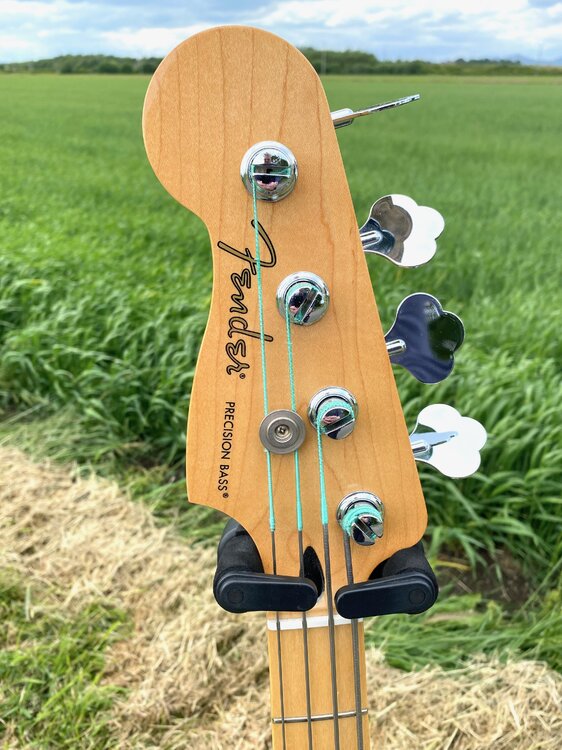
The digital scales today say it's 4.5kg. I've never noticed any neck dive because its natural playing position is quite far left mainly so it's easy to actually reach the first fret! Bass players with short arms may not find it comfortable. The tuners are/were the lightweight narrow post type of their day, schaller Germany types so its not like a 70s fender bass where there is about a kilo of metal on the headstock😉 @bassmanguitars1 photo above demonstrates the typical playing position of the bass( in righty mode).
-
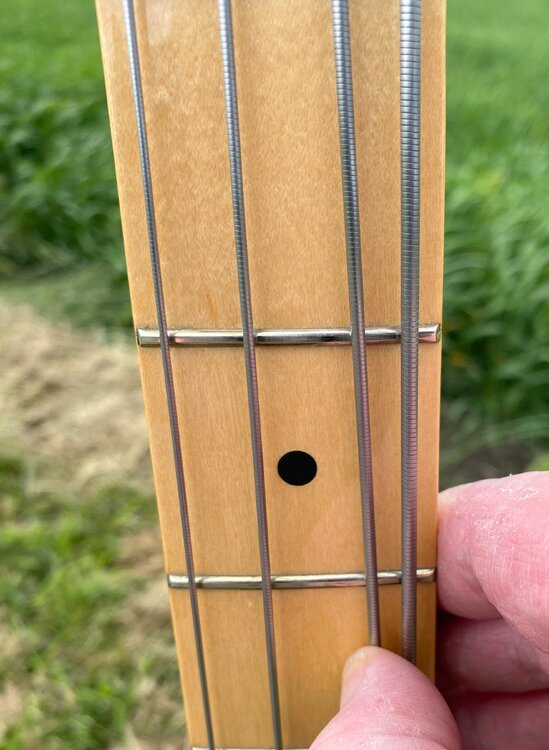
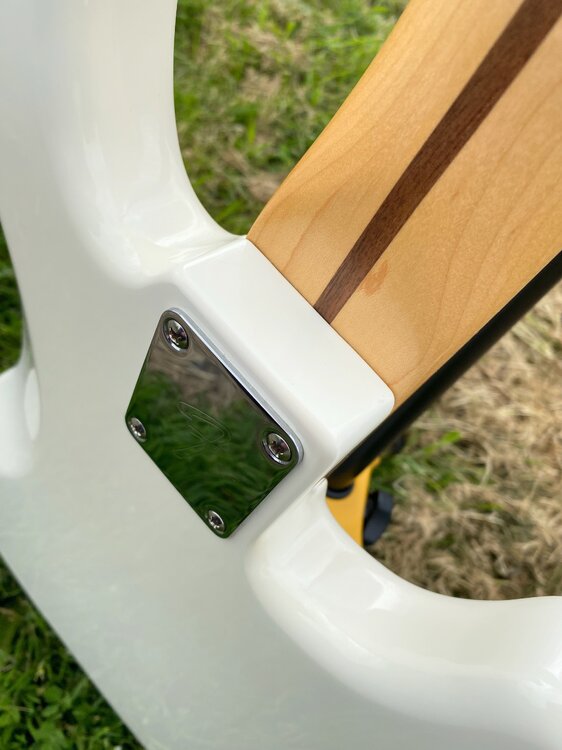
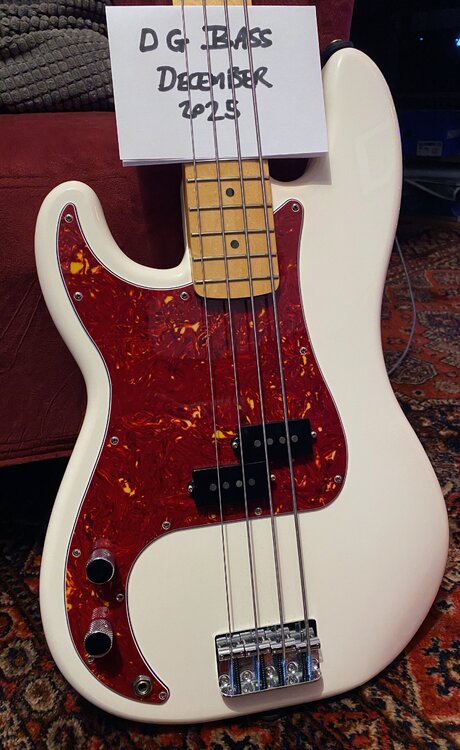
Much as it pains me to offer this bass for sale, I need to continue thinning out the herd. As I have two Precisions, it's a numbers thing and this one I'm afraid has to go 🫤. I'm sure fellow lefties will understand that it takes time to find a good lefty bass, and even longer to find a really good one. This Fender Player is a really good one and has been my go to bass for the last few years. IMHO, this bass just wants to be played. It's a MIM of course, polar white with minty pick guard and maple neck. It weighs in at just around 3.9kg. Everything is fender player original, i've never seen any reason to upgrade any of the hardware or electrics. It's in excellent condition with no scrapes or dings. It's strung currently with Ernie Ball stainless flats in 100 guage. It plays fast and smooth, and has a fairly powerful pickup. Classic p-bass tones by the shed load, and it sits well in a band mix and as a recording instrument. Everything works as it should, tuners, electrics and truss rod. I don't have a case for it and would rather not ship it anywhere either. Interested parties are welcome to come and give it a go in person, tea and biscuits provided. Thanks for reading my ad.
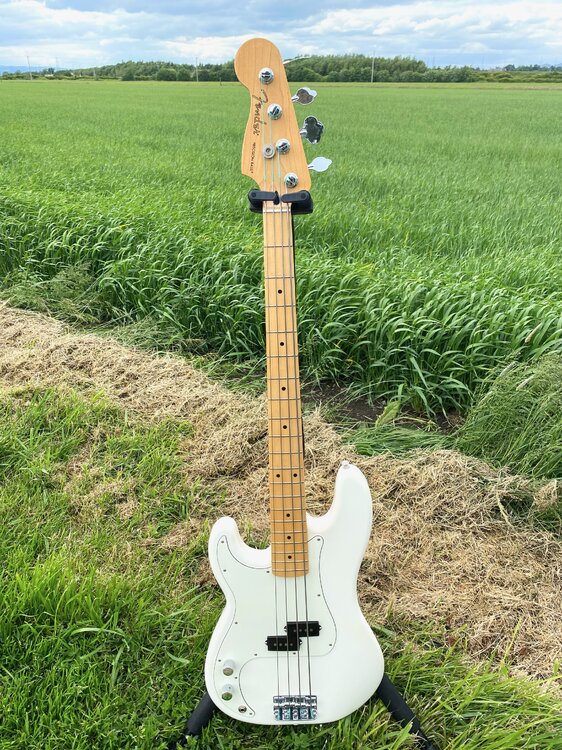
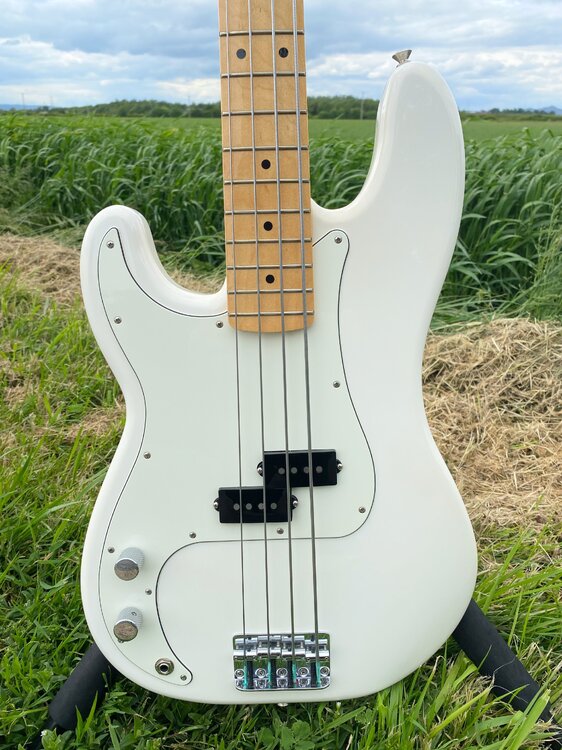
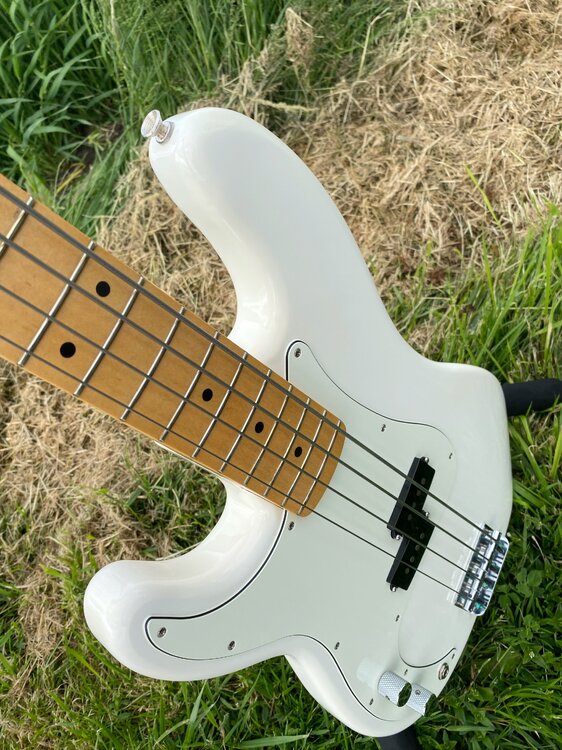
Also comes with additional cherry tort ( that's tort not tart) for the festive season 😁
-
3
-
-
The green finish is quite interesting. If I recall there was a red and an orange option for the translucent finish as well. I don't think your bass has the same pickups though, or the matching headstock. That's the thing with these basses, there were a lot of options at the time so players could create a unique look that suited them, and their pocket. I'm not sure what the tie in to Bernie Goodfellow is regards Overwater?
-
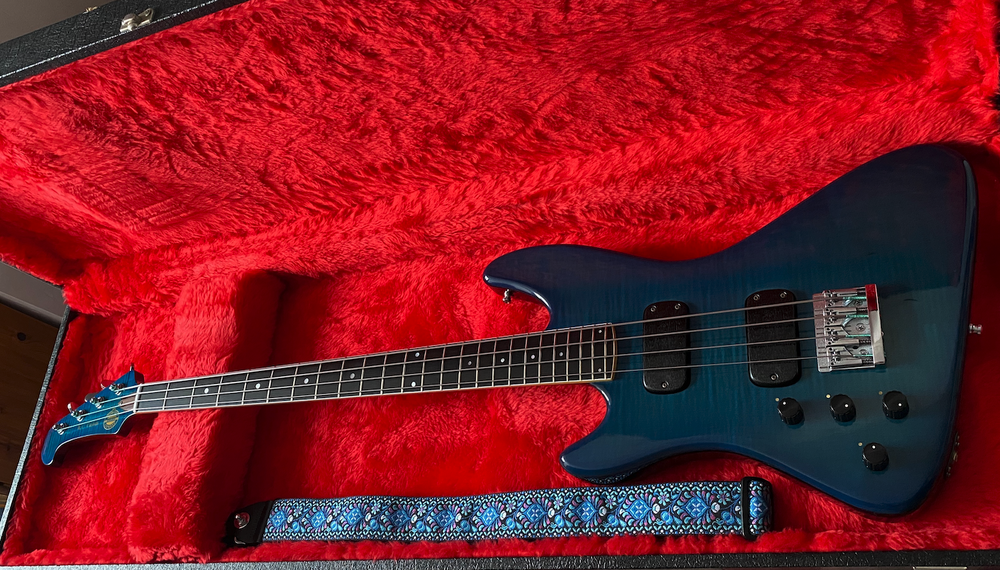
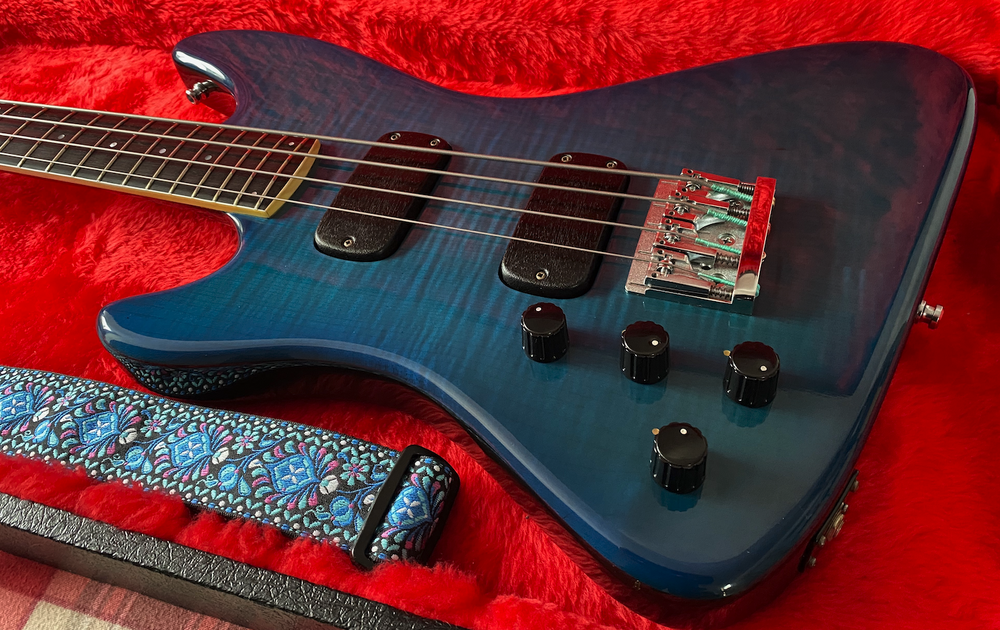
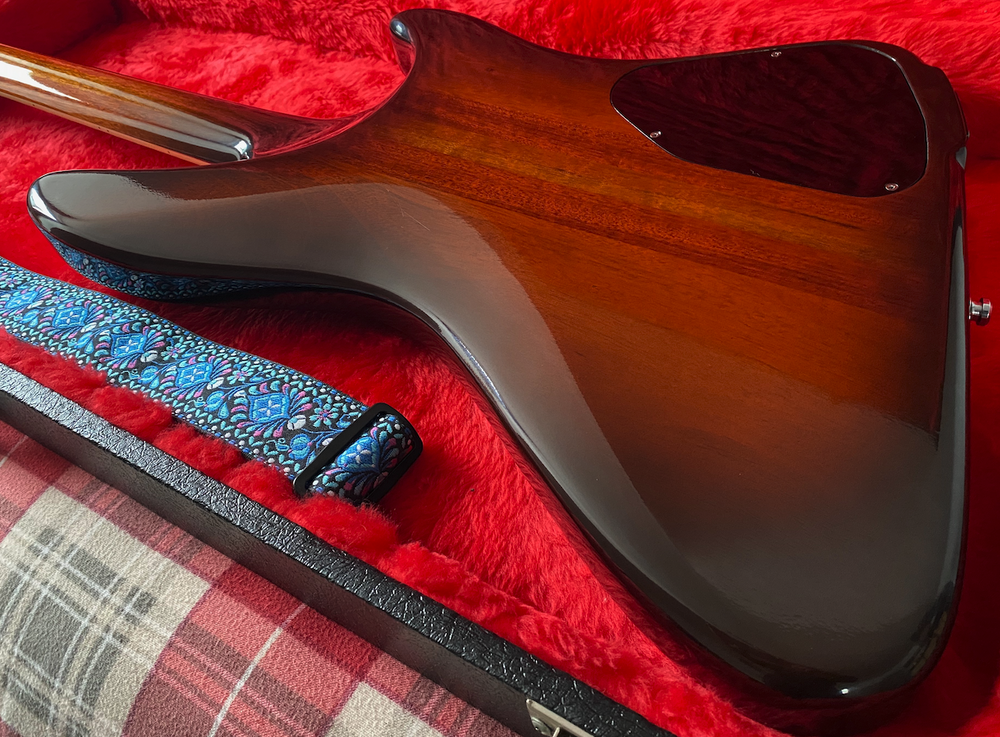
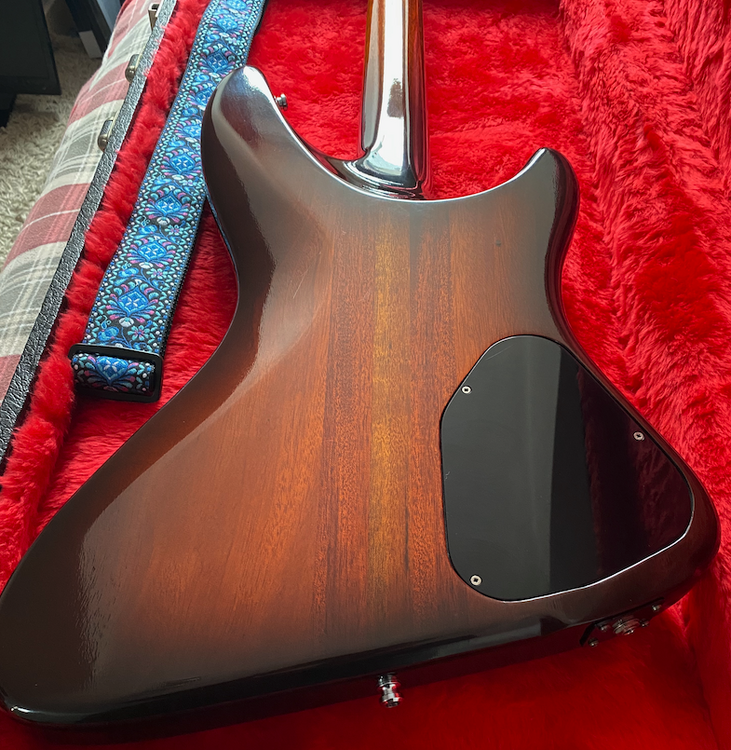
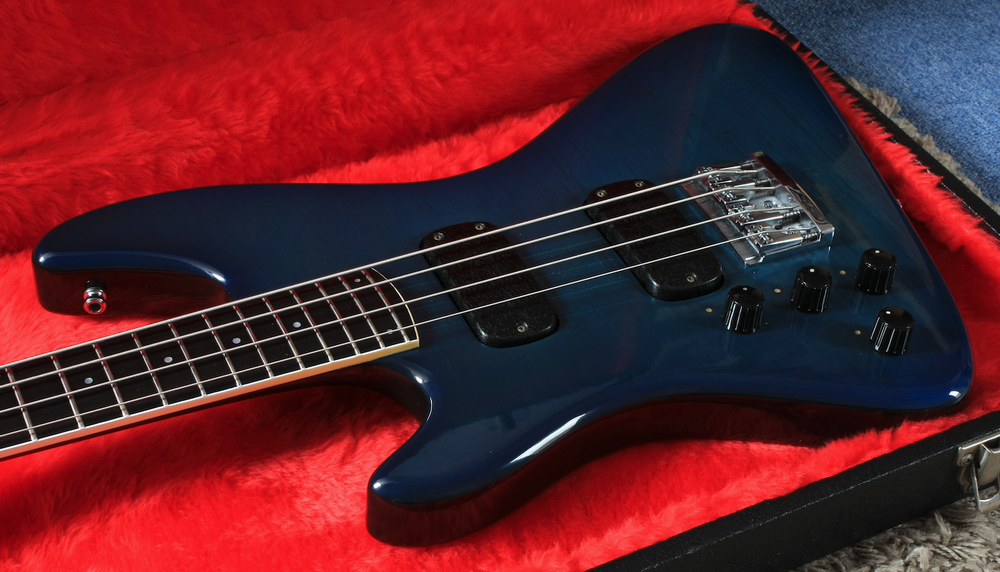
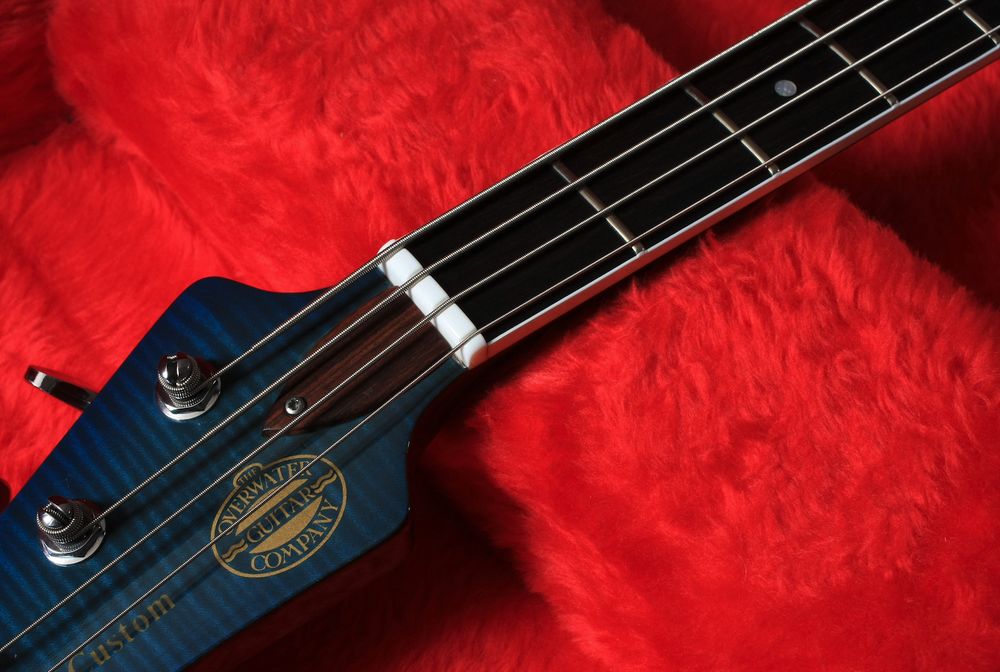
I've been mulling over this sale for quite a while now however it feels the time to put this bass out there to see if there is a new lefty owner who will appreciate it and hopefully play it more than I have in recent times. It's an original "original series" bass, built in the Overwater factory when they were based in Haltwhistle in the early 1980s. I've owned it from new and it has always been well looked after and well maintained. History wise, it was gigged regularly back in the late 1980s and early 1990s but for the rest of its life it's been a case queen, only coming out once or twice a year to do a gig and make sure it was ok. Last time it was gigged was earlier this year and it still plays as fantastically as ever. It's constructed of old school Brazilian mahogany, has a transluscent tint blue maple stripe top with matching heastock. Its a neck thru design and has a bound ebony fingerboard.
The frets are in excellent condition and it still has its original graduated fretting system. I think this was a unique feature on Overwater basses at the time. Hardware is the real deal Schaller chrome made in Germany and it all works as good as new. Straps locks, again Schaller were fitted as standard. Pickups are moulded resin Kent Armstrong soapbars. All original. The bass was originally configured as a passive instrument with VTT and a five position pick up selector. It's very basic but works well. The rear cavity was originally cut to allow fitting of an active circuit at a later date but I never followed up on that option. Currently strung with D'Addario rounds, 100 guage. It plays very fast and low, and has a super slim neck profile. It's also a very long bass despite being a 34' scale instrument.
It comes with its original Overwater wooden case. There were two options at the time, a made to order oversize wooden case, or a full tour spec made to order aluminium flight case. The case has a few bumps and scrapes from use but is in sound condition and does its job well. Last the bass was weighed i'm sure it was around 4.7kg or there abouts. Nut width is jazz bass dimensions. Overall condition is very good to excellent. There is a light laquer scratch on the rear cutaway, same on the top edge, and one small laquer dent near the input jack on the bottom edge. All very small and difficult to notice.
I'm reluctant to post or courier this bass however I may consider a meet up if its a reasonable driving distance from Central Scotland. Interested bass chatters are welcome to come and give it a go and i'll make sure the kettle is primed and biscuits are available. The blue strap in the photo is included. Price wise I have no real idea what these are worth nowadays as its very few and far between that they show up for sale. Lefties are even more scarce. I'm asking £1295 for this one and would be happy with that price. Not looking for trades or swaps unless you own a Fender Jazz serial no. S830880 that you are planning on selling. Thank for reading my ad. Any questions, please PM me and I'll do my best to answer.
Some photos attached.
-
3
-
-
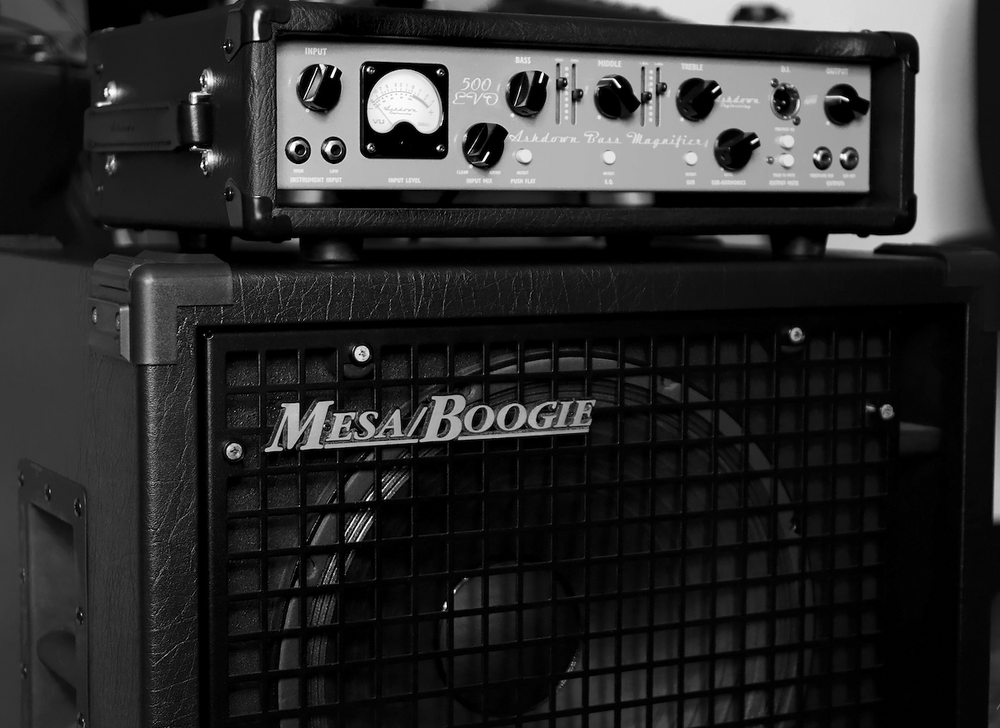
Awesome cabs and one of the best if not the best 1x15 cab I've ever owned and gigged. GLWTS!
-
1
-
-
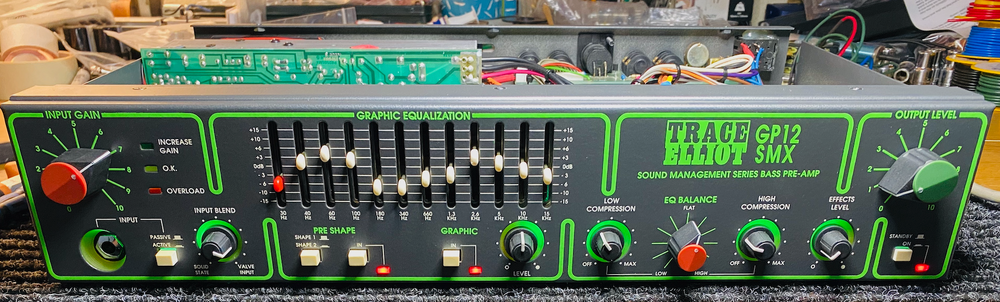
Perhaps more of a cautionary tale in buying old school Trace Elliot equipment is that what you may find is that thirty plus year old gear will actually need some TLC and repairs to get them back to a solid gigging standard. My last find was a thirty four year old TE AH250 GP12 SMX head that was sold for parts or not working on a well known auction site. It arrived in very good cosmetic condition but needed a whole lot of work to bring it back to a usable gigging standard. The cooling fan circuit was shot, the mosfet output transistors were distorting badly, and the pre-amp needed a new tube. The power supply caps on the output board and the pre-amp were shot as well. Not all vintage Trace Elliot stuff is going to be a bargain once repair costs are factored in, but some of it is well worth spending some time and money on because at the end of the day you might well have an amp or cab that out performs anything that's currently available in the here and now for a fraction of the cost. Well thats IMHO.
-
11
-
-
I think sometimes attachment to certain basses is all about first impressions. Picking up a bass for the first time can be an inspirational experience. For me that has always been with either a p-bass or a jazz bass and more often than not a Fender derivative like a MIM or a USA Standard. Not everything is going to endear you to a particular brand but sometimes the feel, the playability, and the tone of a certain instrument is going to make you think wow! this is a keeper. Once that has happened, it's going to be difficult to pass an instrument on to someone else even if it becomes a case queen you still love but rarely play or use.


Stuart Adamson.
in General Discussion
Posted
I met Stuart and the band in 1982 when they were doing a few warm up gigs around Scotland prior to their first UK tour. Thoroughly nice bunch of guys, and very down to earth. They sat pre-gig at a table having a beer in the lounge with everyone else in the club. The gig that evening was at a local Disco Club called the Mayfair Lounge in my hometown in North Lanarkshire. I was still in my teens at the time, a big SKIDS fan, and quite thrilled to speak with the man himself. Tony Butler was also a complete gent and was quite happy to talk about his rig. It was the first time I'd ever seen Trace Elliot gear in the flesh. He was using a four cab setup with two amp heads, and that evening was playing an Aria Pro II TSB bass. Stuart and Bruce were both using their early trademark HH combos and Yamaha SG's. Mark had an enormous drum kit. I always remember that gig well as it was very LOUD but super clear and perhaps a bit overkill for the size of the club. The next time I saw them live just a few months later was at Tiffany's (the Locarno Ballroom) in Glasgow playing to a crowd of thousands when they hit the big time with their singles Harvest Home and Fields of Fire, and of course their album The Crossing. I always remember them as a lovely bunch of down to earth guys, and fantastic musicians. They made some iconic music in their time, and were great influences for me musically.